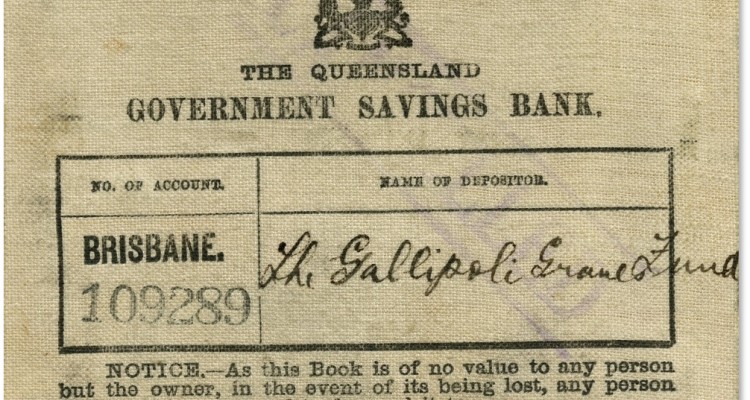
Gallipoli Graves Fund, 1916
Prior to the formation of any official body such as the Commonwealth War Graves Committee, Australians were concerned for the security of the graves of those who had been left behind on Turkish soil.
When Colonel David Gifford Croll, 2nd Light Horse Field Ambulance, left the Gallipoli Peninsula in December 1915 he wrote solemnly of the prospect -
"From the crowded decks many looked back towards the little settlement that had told such a brave story to the whole world. In its slumberous glow it was sleeping its last sleep for them, although they didn’t know it. A few nights later it would be in darkness, or if any lights there, they would be those of the Turks prowling over the graves."
Gallipoli Graves Fund
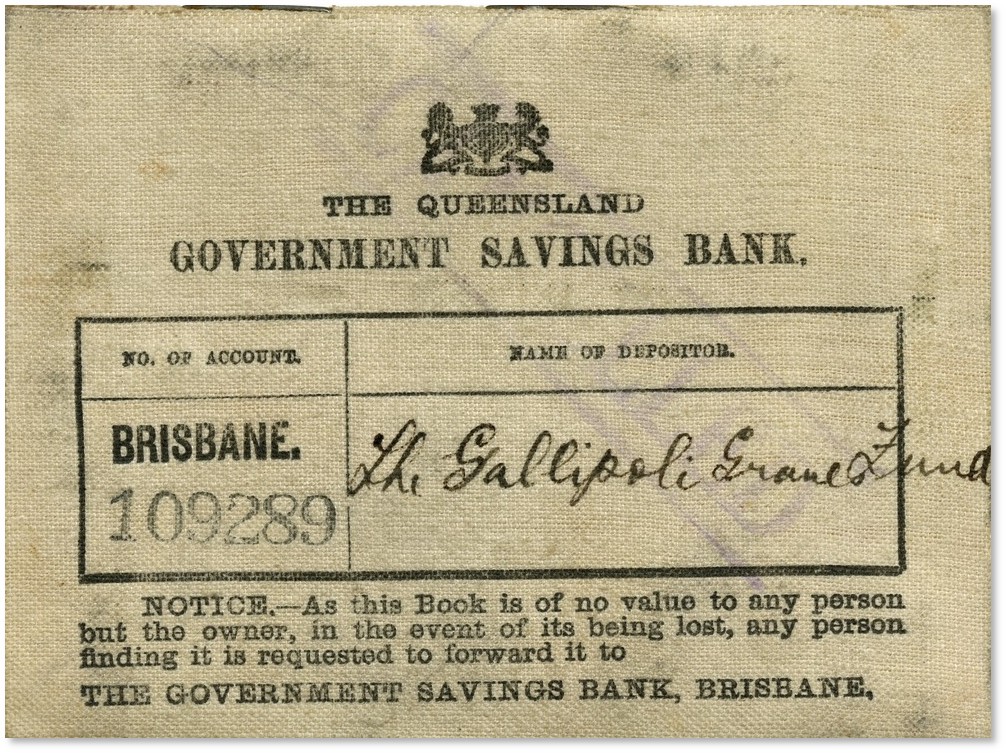
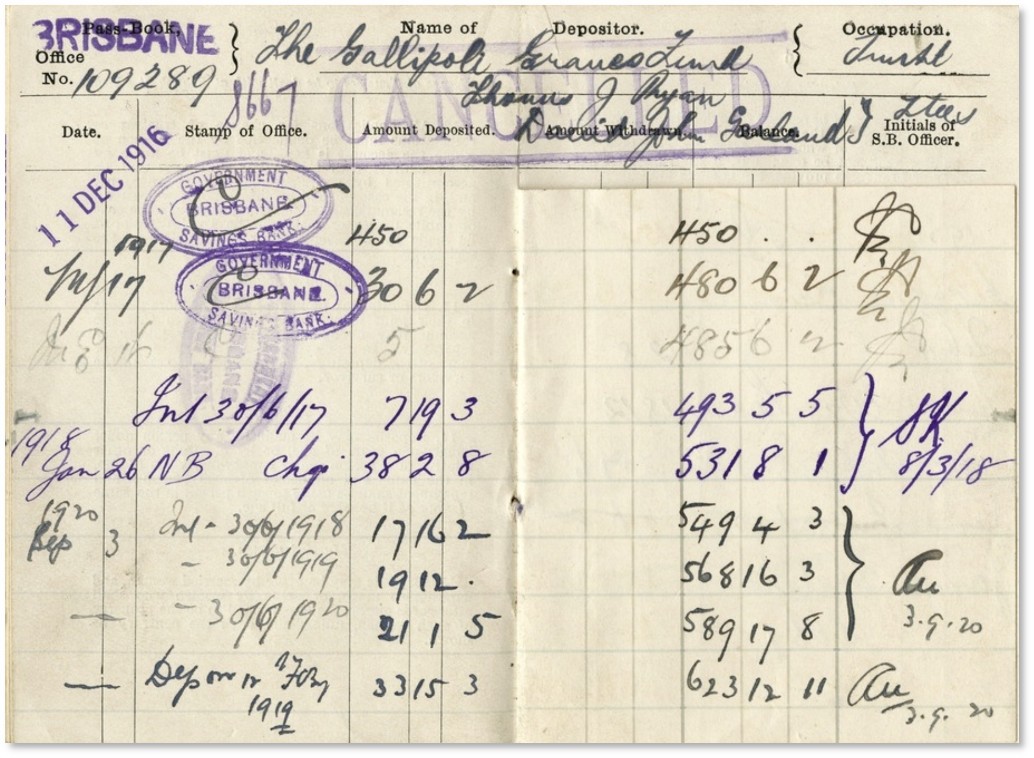
In April 1916 the very first observance of Anzac Day was held, and for the first time badges were sold to raise money for the "Gallipoli Graves Fund" - in February 1917 the Premier of Queensland, T.J. Ryan and Canon David Garland, presented the bank-book, pictured above, showing £450 in credit to the fund, to the executive of the Anzac Commemoration Committee.
Schools and associations were invited to order commemorative badges from the Committee, as part of the Anzac Commemoration programs held each year. In later years, these funds were donated to the maintenance of war graves of returned servicemen in Australia, erection of memorials, and to assist returned war veterans.
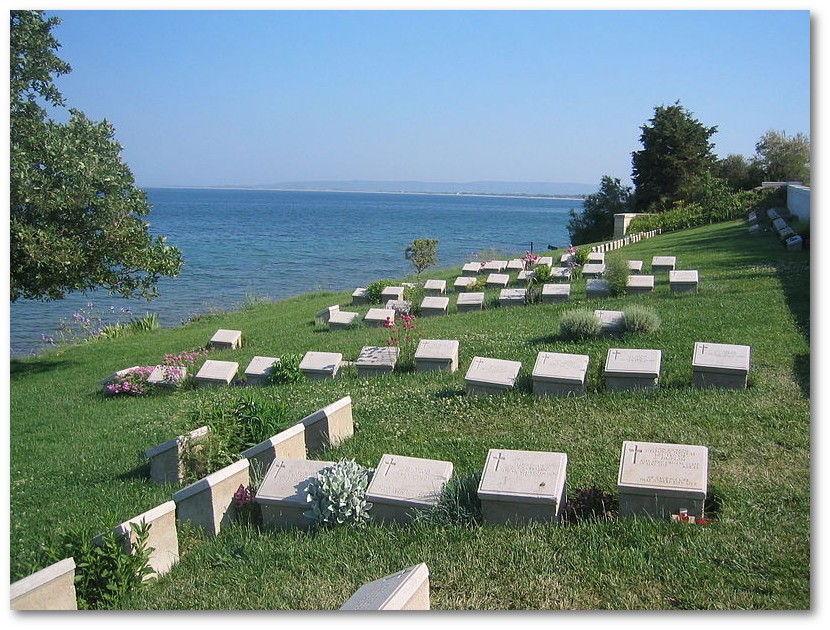
In October 1918 Lieutenant Cyril Hughes and Acting Sergeant Arthur Wooley, both former surveyors, were ordered to proceed to the Gallipoli Peninsula, armed with burial reports, cemetery plans & index cards - they were tasked to locate every allied soldier's grave and cemetery.
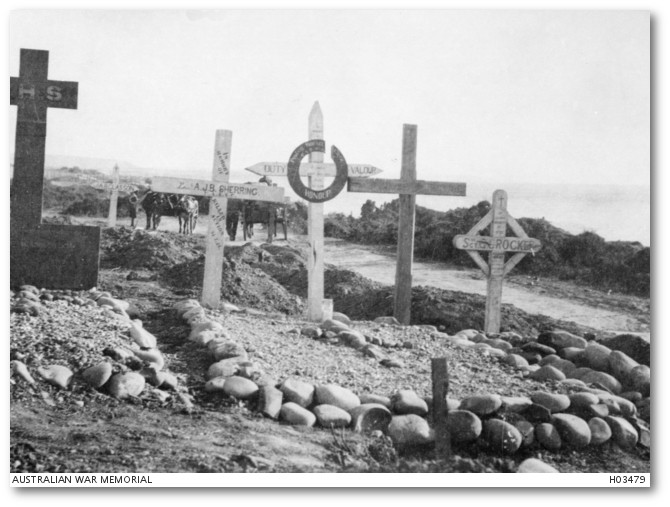
The task was undertaken with considerable success, given the difficulties, the sites were surveyed and Hughes recommended that it be set-aside as a permanent commemorative area.
Hughes joined the Imperial War Graves Commission (IWGC) now Commonwealth War Graves Commission, which still today ensures that those who died in the two World Wars will never be forgotten, at 23,000 locations in 154 countries.
Families and loved-ones asked, 'where is he buried' - so that - 'I may know that he is truly dead, not missing or taken prisoner,' and 'that one day a member of the family may be able to visit his grave' - to tell him - he is remembered.
Read more ...
- OM79-13/13 Gallipoli Graves Fund Passbook, State Library of Queensland
- Anzac Day Commemoration Committee Records 1916-1974
- Anzac Day Commemoration Committee, Queensland
- ANZAC Commemoration. The Daily Mail, 9 February 1917 , p. 9
- Commonwealth War Graves Commission
- Establishing Gallipoli's Graves by Dianne Rutherford
- Gallipoli Graves. The Brisbane Courier, 18 May 1917 p. 7.
- Office of Australian War Graves
- Where Anzac Dead Lie. Recorder (Port Pirie, SA), 12 October 1920, p. 3