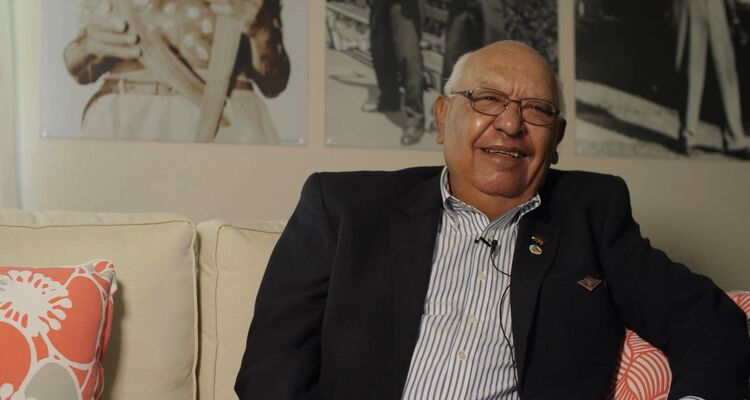
Remembering the service of Sapper Peter Hegarty
Peter Hegarty has spent a lifetime serving his community and country. Born in the former Mission town of Cherbourg in 1943, he served six years in the Australian Army as a sapper and was posted to Vietnam, Malaya and Singapore.
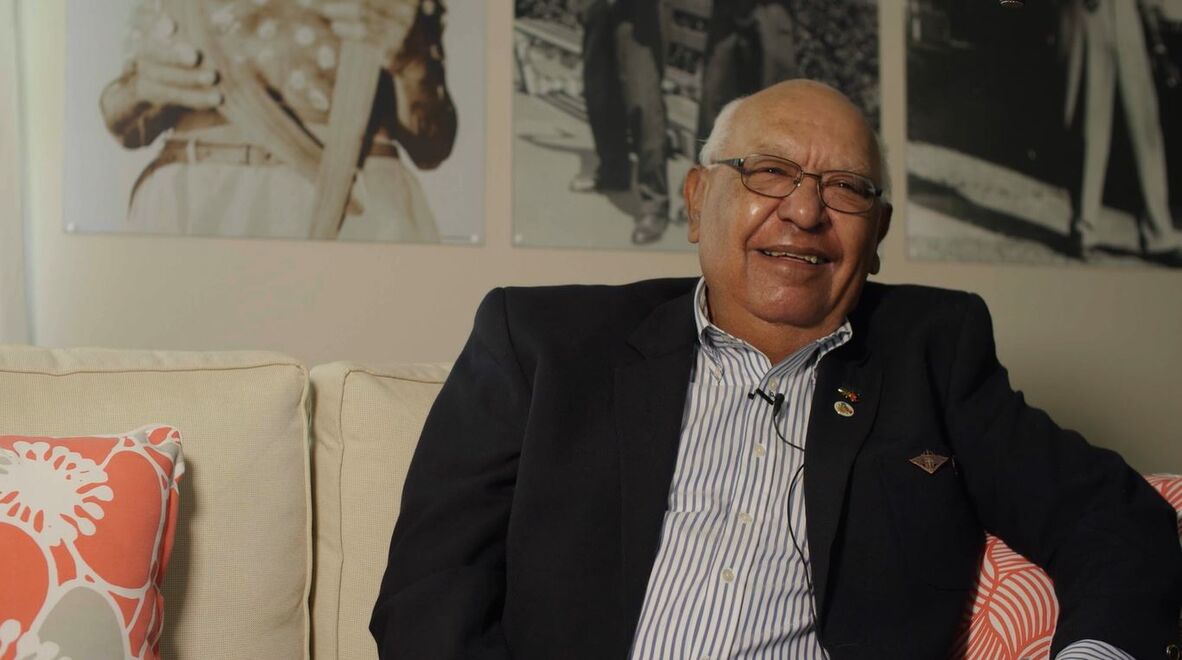
Like many Queensland towns, Barambah-Cherbourg has a long history of sons going off to war. Despite restrictions on Indigenous mobilisation, 47 men enlisted from the area in World War I and another 19 in World War II. For Peter, the decision to join the Army came after two mates, the brothers Glen and Irwin Brown, enlisted and joined engineering units.
Peter completed initial training at Kapooka, Wagga Wagga, before undergoing specialised training at the School of Military Engineering, Casula. Following 12 months at Casula, he was transferred out to 7 Field Squadron at Enoggera.
Further training was to come, however, as he prepared to depart for overseas service...
‘[At Canungra] you never walk anywhere, you have to run. And for six weeks you run. The only time that you were … it was acceptable that you didn’t have to run or trot or whatever was when you were going for a meal because you were going to the mess.’
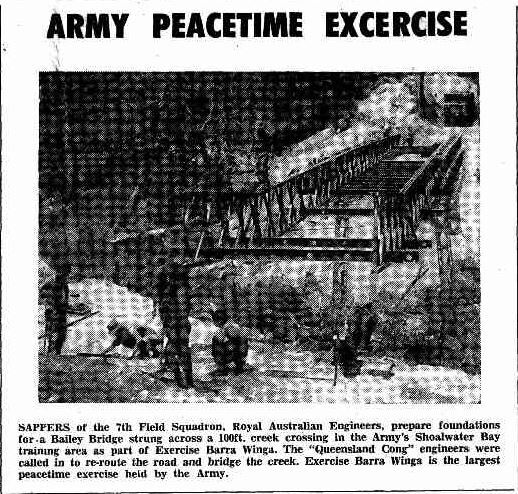
Canungra was followed at Shoalwater Bay, where 7 Field Squadron was part of the 1966 exercise Barra Winga. At the time, this was the largest peacetime field exercise conducted by the Australian Army. Drawing on naval and air support and including British and New Zealand contributions, it was designed to simulate anti-guerilla actions in Vietnam. At times acting part of the ‘Queensland Cong’ Peter and his unit laid bridges, established water supply and built roads.
‘You are made alerted to the fact that you’re going into a warzone and … you have to be on your toes, be alert and don’t ever take things at face value. Yep, they really hammered that into us before we went.’
The reactions of Peter’s family to the news he was going to Vietnam was varied.
‘… My dad, he was fine. You make your bed, you lie in it. That was his attitude. You wanted to go in the Army, you serve in the Army and do the best you can. … My brothers were fine with it as well, but my sisters were a little bit hesitant … lot of tears were spent crying.’
Peter left for Vietnam on a Pan Am flight, stopping in the Philippines for the night. He recalls having to wear civvies on arrival in the Philippines, to be less identifiable as soldiers. Back in uniform, he flew into Saigon then onto the Australian base at Nui Dat via ‘the old Caribou.’
‘When you land there the first thing that hit you is the smell, the atmosphere, the heat and you have never lived in that sort of tropics before. Whilst Queensland is pretty hot, it’s a different type of heat. And that makes you aware that you are now in a warzone, in a country – a strange country.’
At Nui Dat, Peter was assigned to 1 Field Squadron, which provided engineering support to the Australian Task Force stationed there. This included the delousing of booby traps and searching Viet Cong tunnels.
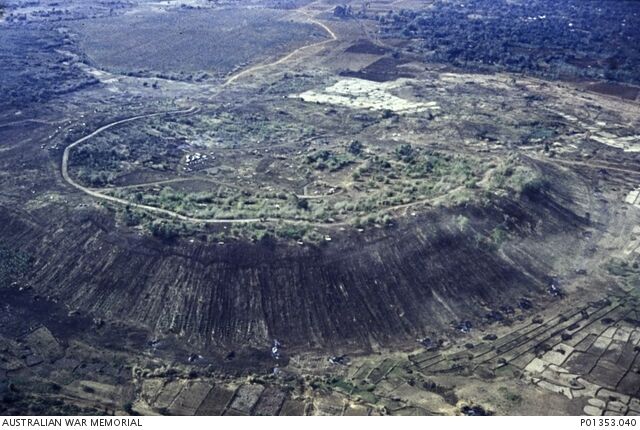
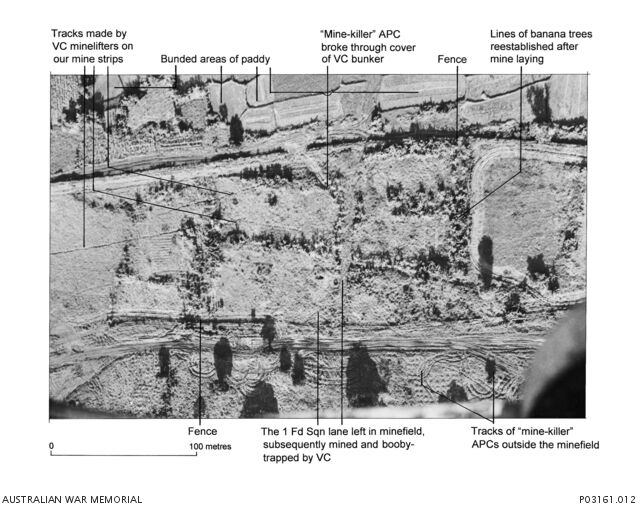
A major task was the laying of the infamous Barrier Minefield. Begun in early 1967, the minefield stretched from the Horseshoe (a crescent shaped extinct volcano) near Dat Do to the coast, some 10 kilometres long. It was flanked by a fence on either side and contained thousands of M16 bounding mines, some equipped with anti-lift devices. Designed to sever a Viet Cong supply route, it proved very deadly to Australians.
‘We lost a number of members there because of the anti-lifting devices they used there in the mines at the time and it was very delicate operation laying these mines and you had to be very careful …’
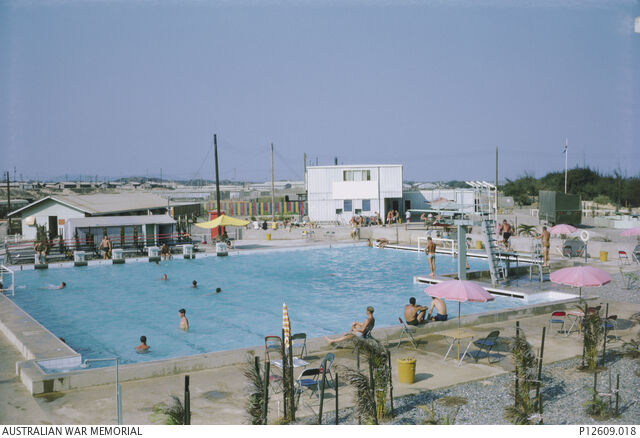
Behind the wire, daily duties included maintaining defensive trenches, stand to’s and cleaning facilities. For a time, Peter was assigned a role of significant prestige…
‘I ended up in the canteen, given the job behind the canteen to serve behind the bar at one stage. I loved that because I thought I was the king pin then around there and everyone curtailed to me and had to be polite and everything like that because I was in charge of the bar.’
‘When we did have time off we would go down to Vung Tau and we would meet up with our sister battalion, which was 17 construction, and we would go to the Peter Badcoe Club. And there was an American Club there too.’
On one occasion, when returning in trucks from Vung Tau to Nui Dat, tensions were high between 1 Field and 17 Construction. There had been a rugby union match between the two squadrons in town, and disagreements over the game were fuelled by beers. When the trucks pulled over for a break, in enemy territory, ‘a fight erupted between a couple of blokes on the football team.’
'When we got back, we were all told to go back to our lines, and not to come out of there until we fronted the Squadron Major – sorry, the Squadron Officer in Charge … we were confined to our tents for 24 hours and weren’t allowed to go up to the canteen.’
Peter got on very well with the men of the engineer squadrons. While some Indigenous Vietnam veterans have reported experiencing racism in the service, most claim the Army was a place of equal brotherhood (see Riseman 2012). For Peter, his experience fell into the latter category.
‘I met a stack of Indigenous soldiers, they were my mates too.’
After some 9 months in country, Peter’s tour of Vietnam was over. He flew back into Australia, where he was met by his family.
‘When I got back from Vietnam I was really proud to see my father at the airport and my older sister. I was really, really proud.’
In contrast, Peter felt that his service was not honoured by the Australian general public.
‘We didn’t ask to go, we were just sent there, it was the Government’s decision and yet people took it out on us, you know. The public took it out on us, which was sad. … I say that we have an Aboriginal history in this country. We also have a history about the way the Vietnam vets were treated by this country.’
Peter later deployed overseas again to Malaya and Singapore, where he would spend a combined two years. Upon his return, he undertook further training at Casula. This would see him qualify as the Pay Representative for 7 Field Squadron at Enoggera; a position he held until his discharge.
‘I actually went in the Army to better myself and whilst I seen active service I did courses on my return back to Australia at the School of Military Engineering. … [I] spent a number of years down there doing courses to upgrade my skills so that I could ensure that after I left the Army I had some transferrable job skills that could be applicable out in civvy street.’
‘After my discharge my first job was posted to Townsville. I got my first government job in the Department of Aboriginal and Islander Affairs as a Welfare Liason Officer.’
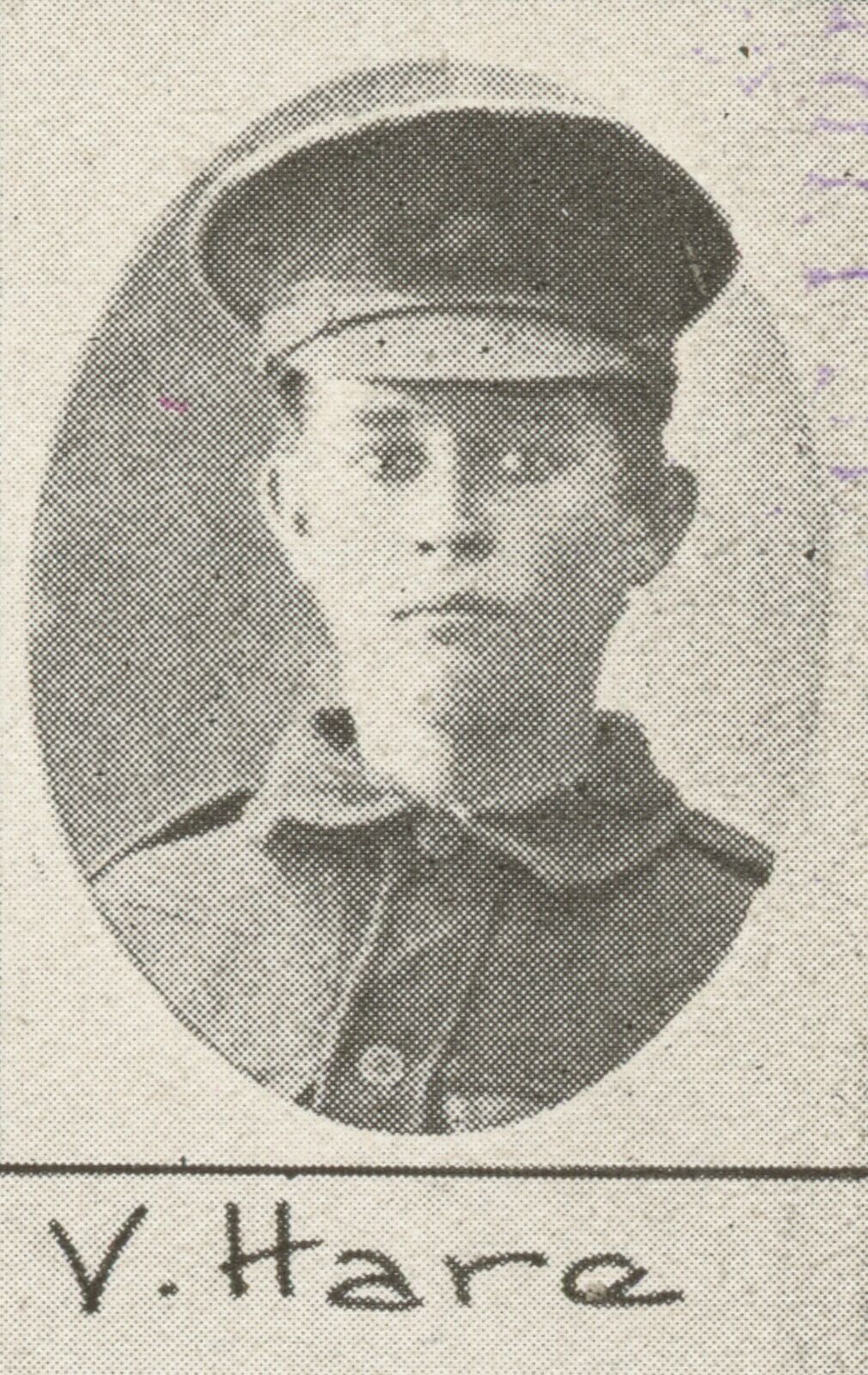
This position proved most fortuitous for Peter, as he was able to re-establish connections to family in the area. His grandfather, also named Peter, was a Wulgurukaba man and had lived around Magnetic Island (Yunbenun) and northern Townsville before being forcibly relocated to Cherbourg. It was during this period of reconnection that Peter learnt his family had a history of military service. Several cousins had served in PNG. An uncle, Valentine Hare (3297), had served in the 2nd Light Horse and was wounded in action at Ghoraniyeh Bridgehead, Palestine in 1918.
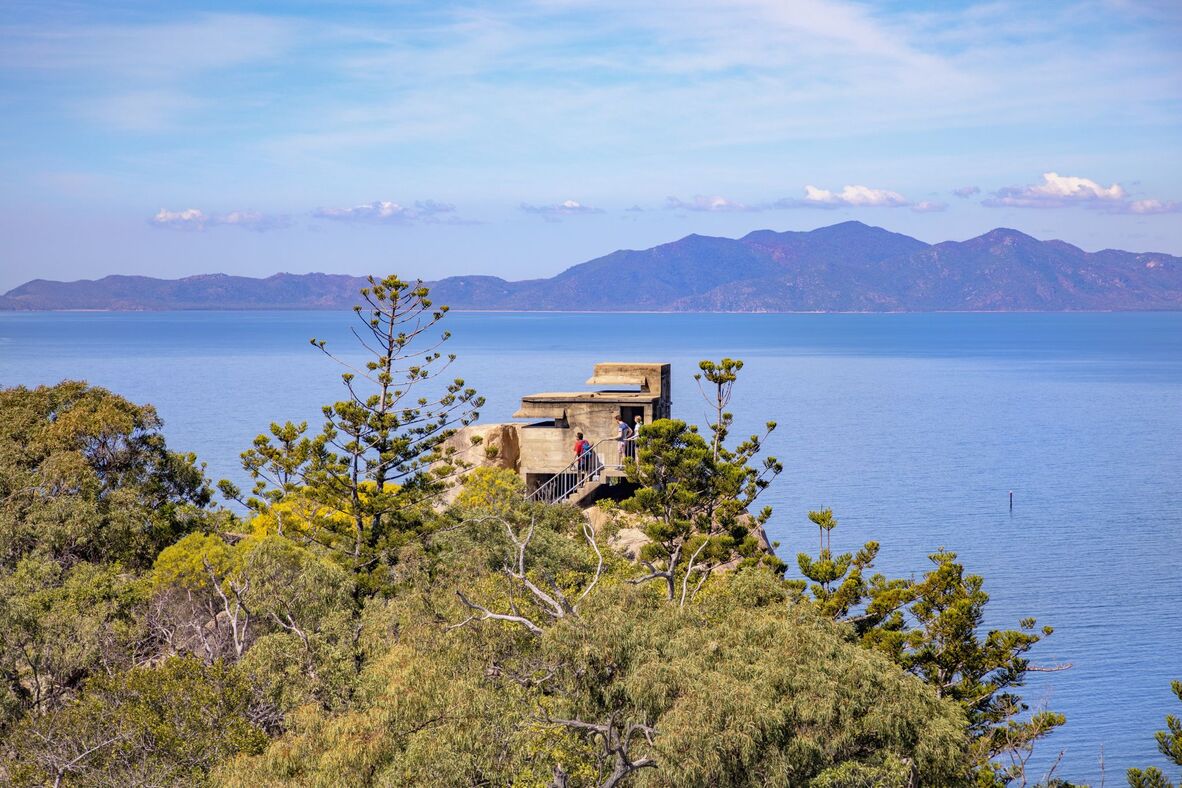
As the Wulgurukaba People campaigned for Native Title, Peter became the de facto negotiator between his family and Defence. On Magnetic Island, where the Wulgurukaba People have a Land Use Agreement, several concrete fortifications remain from the Second World War; built to protect Townsville harbour. In consultation with the Department of Defence, Peter has campaigned for the preservation of these structures and the important historical chapter they represent.
‘Because of my military background, I am now looked upon by my people that I – as a first contact for anything to do with Defence.’
Peter is also active in veterans’ communities and commemorations around Cherbourg, where he still resides. Initially ‘cheesed off’ with the RSL after return from Vietnam, he is now involved with the Murgon subbranch. Likewise, he abstained from Anzac parades for years, but now proudly participates alongside fellow Vietnam veterans, Claude Malone, Eric Law and others.
‘I come over every year with Eric and all of us. We have a service here and we’re joined by the Murgon RSL and it’s an annual event. We have a parade here at 8 o’clock every Anzac Day and then we go into Murgon and celebrate with them as well.’
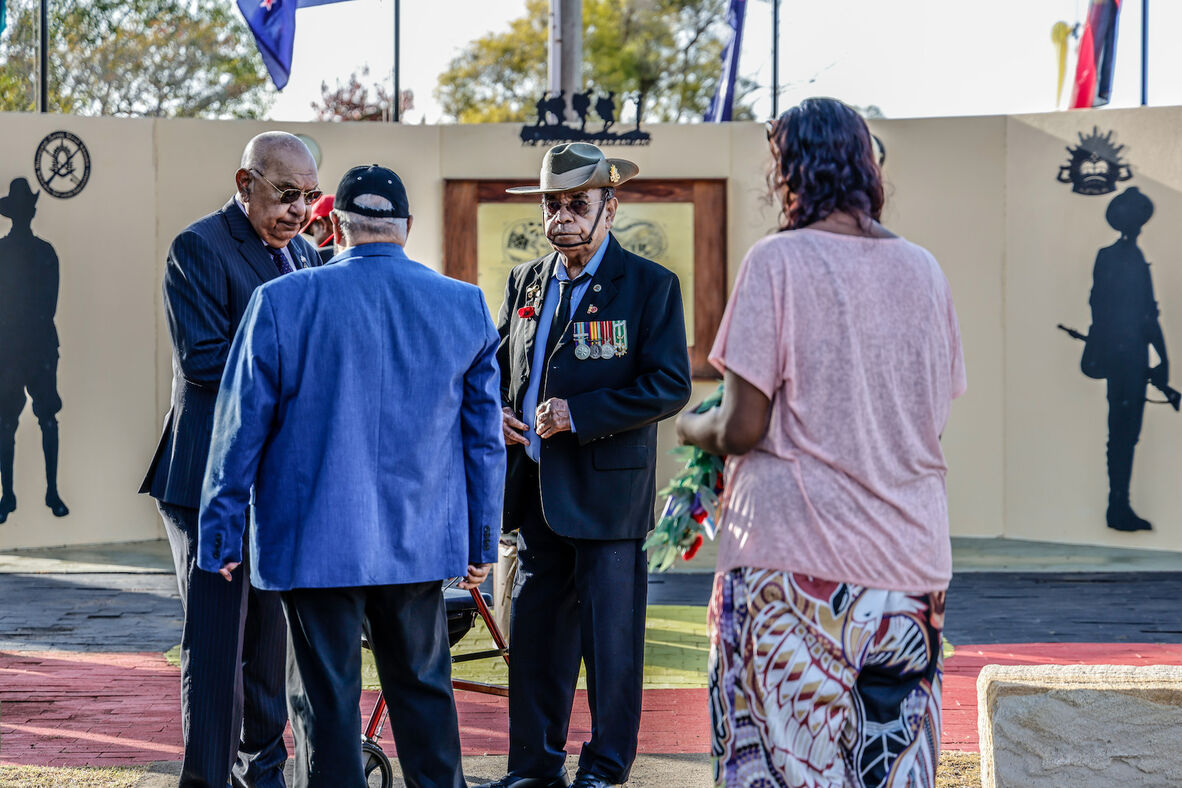
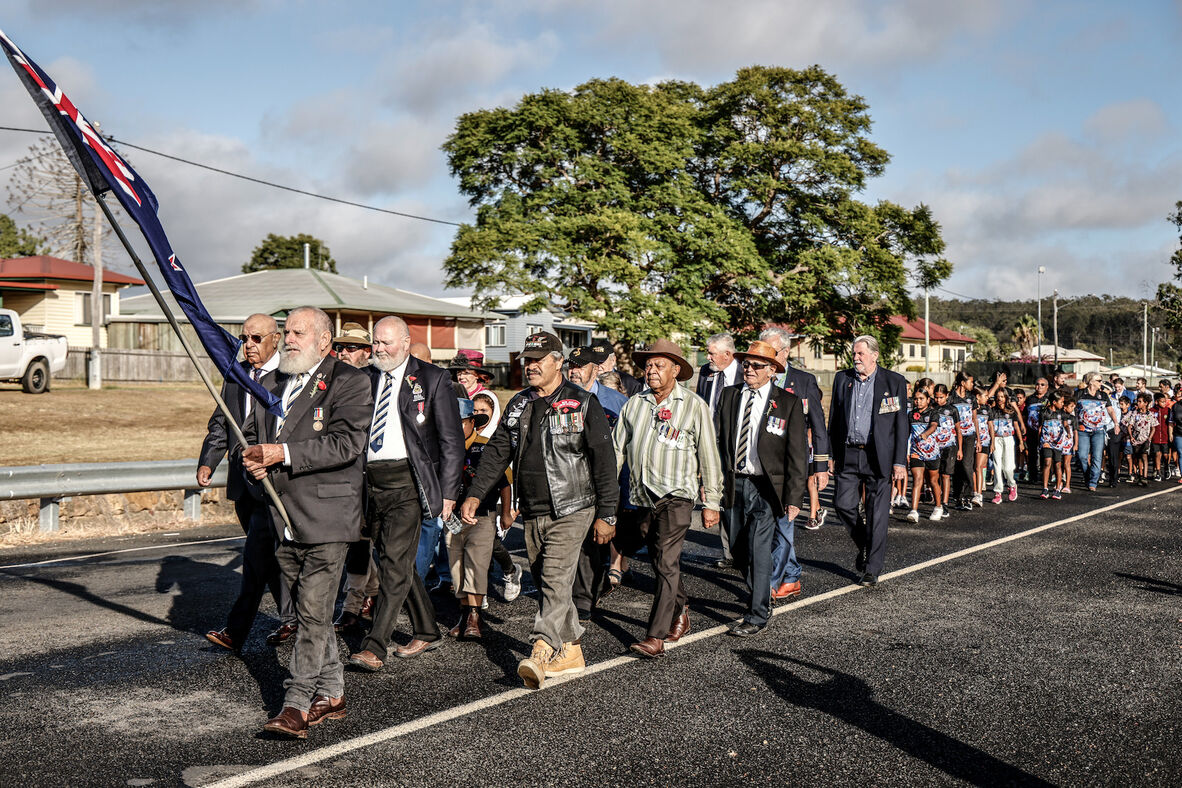
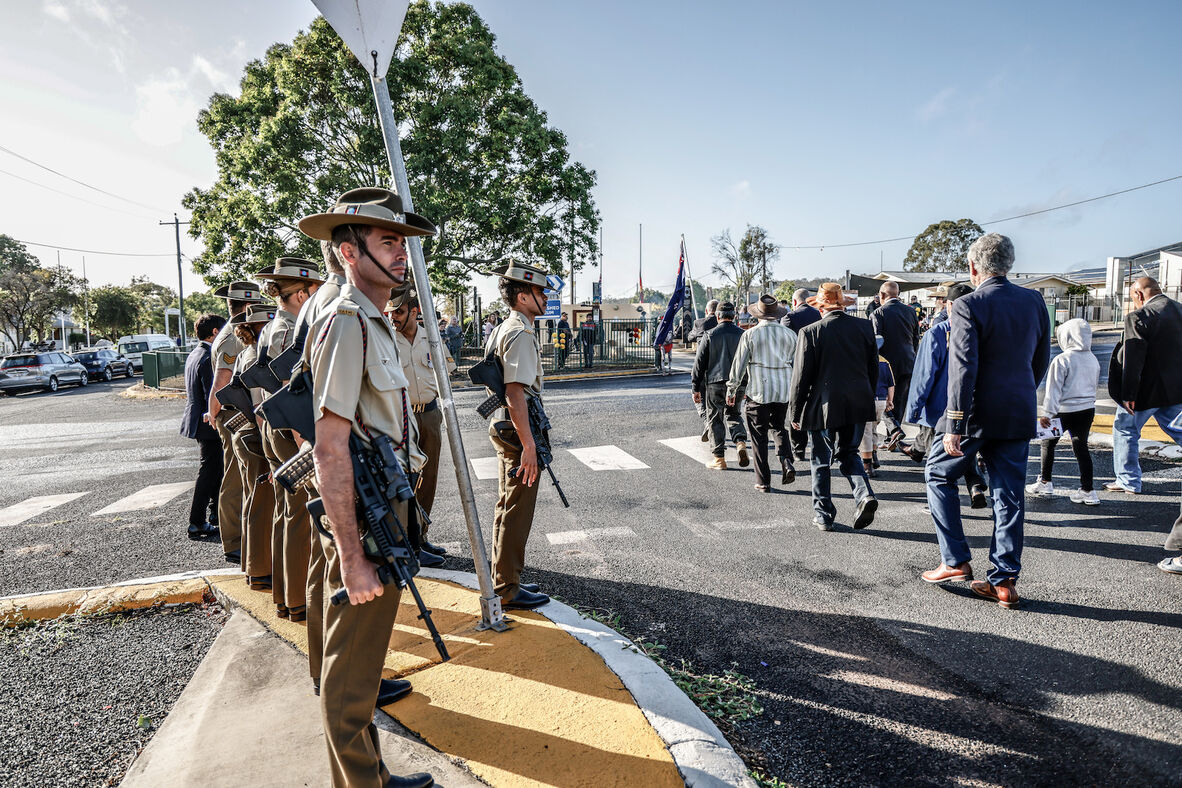
Drawing together veteran Diggers, active servicemembers and the community, the commemorations highlight the contributions of local men and women in their service to country. It is a commitment that Peter continues to advocate for, particularly amongst young Australians.
‘If they are finding it difficult to get jobs and employment and stuff like that, my recommendation is the best thing to do is join the services. The Army will give you the best grounding in life then give you the skills to transfer on and live a good life. … be able to establish yourself and give you that particular training, and you will find that you will get friendship … lifelong friendships that last a lifetime.’
As for his own personal legacy, Peter’s wishes are indicative of a man who has spent decades serving country, community and family.
This Remembrance Day, we are highlighting the lives of Queenslanders who have served Australia in times of war and peace. We encourage you to reflect on the experience of a family or community member and consider how their service affected their own lives. Who will you stop to remember?
Quotes in this article were drawn from a 2021 interview with Peter Hegarty, conducted by This Story Australia on behalf of State Library of Queensland. You can view the entire interview online at: Vietnam Veteran Peter John Hegarty digital story and oral history
References and further reading:
Australian Army (1 September 1966) ‘Wheels on startline’, Australian Army.
Department of Veterans Affairs (2025) A minefield, Anzac Portal Website, accessed 9 October.
DESI (Department of the Environment, Tourism, Science and Innovation) (2023) Magnetic Island National Park Management Statement, DESI, Queensland Government.
DESI (2025) Magnetic Island National Park Forts Walk, Parks and Forests Website, accessed 9 October.
DESI (2025) Magnetic Island National Park Nature, culture and history, Parks and Forests Website, accessed 9 October.
National Archives of Australia: Australian Imperial Force, Base Records Office;
B2455, First Australian Imperial Force Personnel Dossiers, 1914-1920; HARE V, HARE Valentine : Service Number - 3297 : Place of Birth - Burdekin QLD : Place of Enlistment - Townsville QLD : Next of Kin - HEGGARTY Rose, 1914-1920.
National Native Title Tribunal (2025) ‘QI2010/018 - Wulgurukaba People ILUA’, Register of Indigenous Land Use Agreements Details Website, accessed 9 October.
Queanbeyan Age (2 December 1966) ‘Army peacetime excercise’, Queanbeyan Age.
Queensland Government (2025) Fort Complex Magnetic Island, Queensland Heritage Register Website, accessed 9 October.
Riseman N (2012) ‘Equality in the ranks: the lives of Aboriginal Vietnam veterans’, Journal of Australian Studies, 36(4):411-426.
State Library of Queensland (2021) Vietnam Veteran Peter John Hegarty digital story and oral history., This Story Australia, State Library of Queensland.
Van Vonderen J (2015) ‘Anzac Day 2015: Indigenous town of Cherbourg honours its World War I diggers with special exhibition’, ABC, accessed 9 October 2025.