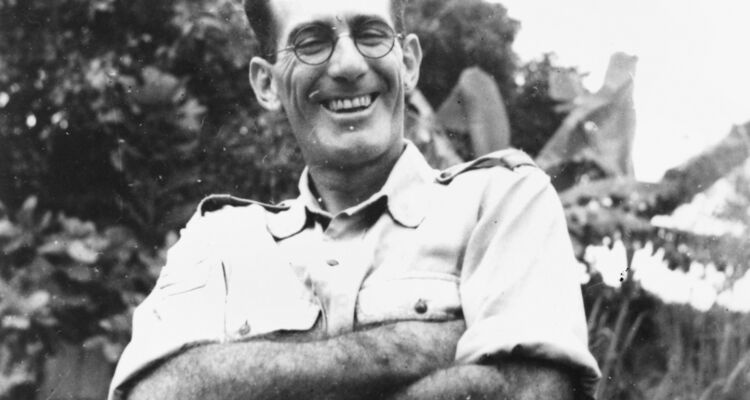
Sergeant James Frederick Wieneke QX28273: An artist who recorded military history
People from all walks of life were part of our Australian Imperial Forces during World War II. Professional Queensland artist, James Wieneke, served in the Pacific theatre and using his talents, made an amazing contribution to the historical record of the Australian experience in the Torres Strait Islands and New Guinea. State Library of Queensland holds six collections of papers, photographs and artworks relating that give great insight into the professional and personal life of James Wieneke.
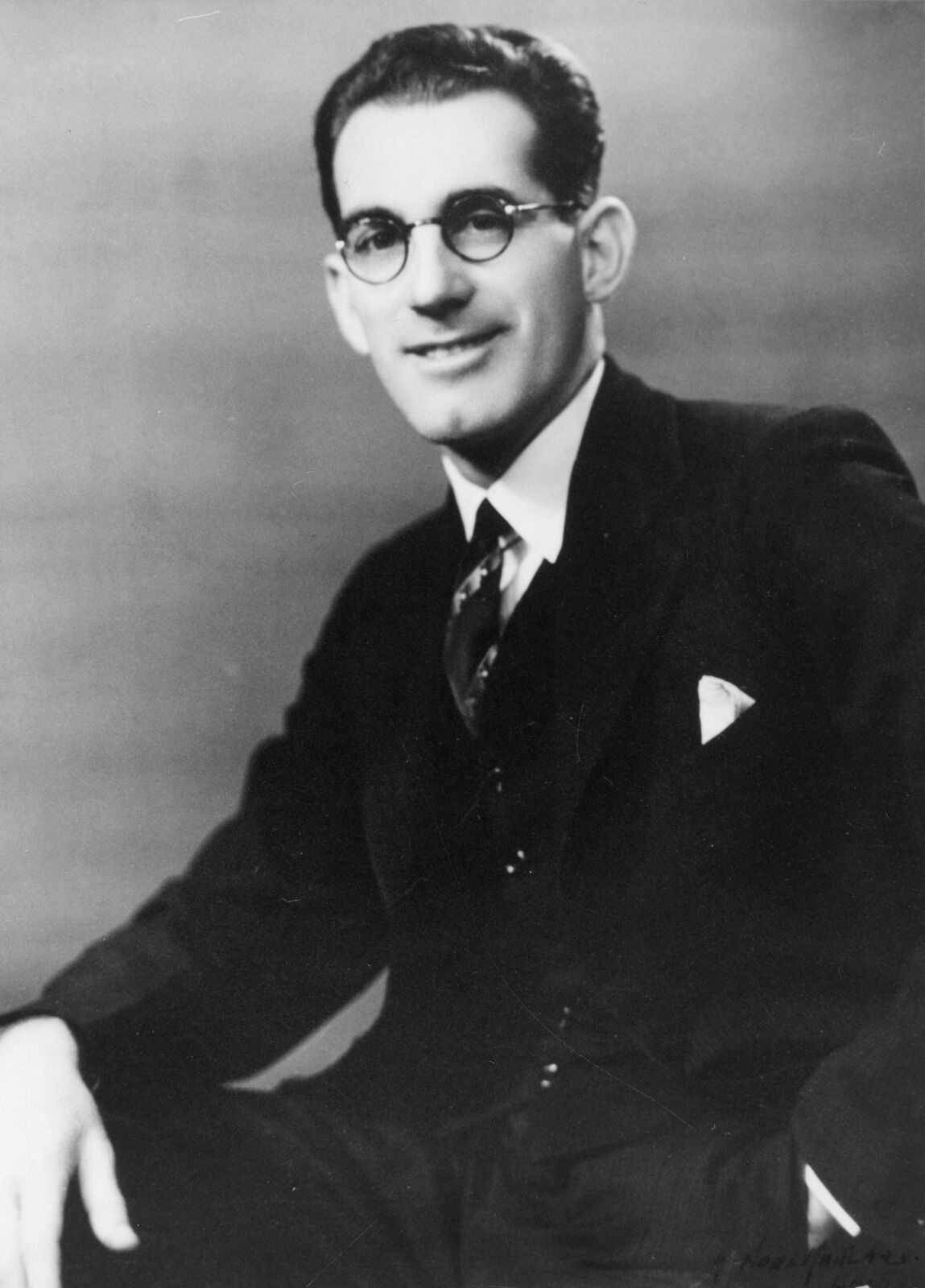
James Frederick Wieneke was born in Bundaberg, Queensland, in 1906. In his twenties, James studied art at the Brisbane Technical College (BTC) for 3 years. His talent was recognised with the BTC’s Godfrey Rivers Medal for excellence in art, at the completion of his course, in 1932. The following year he produced a collection of sketches and water colours of the people and landscapes he observed during a visit to western Queensland.
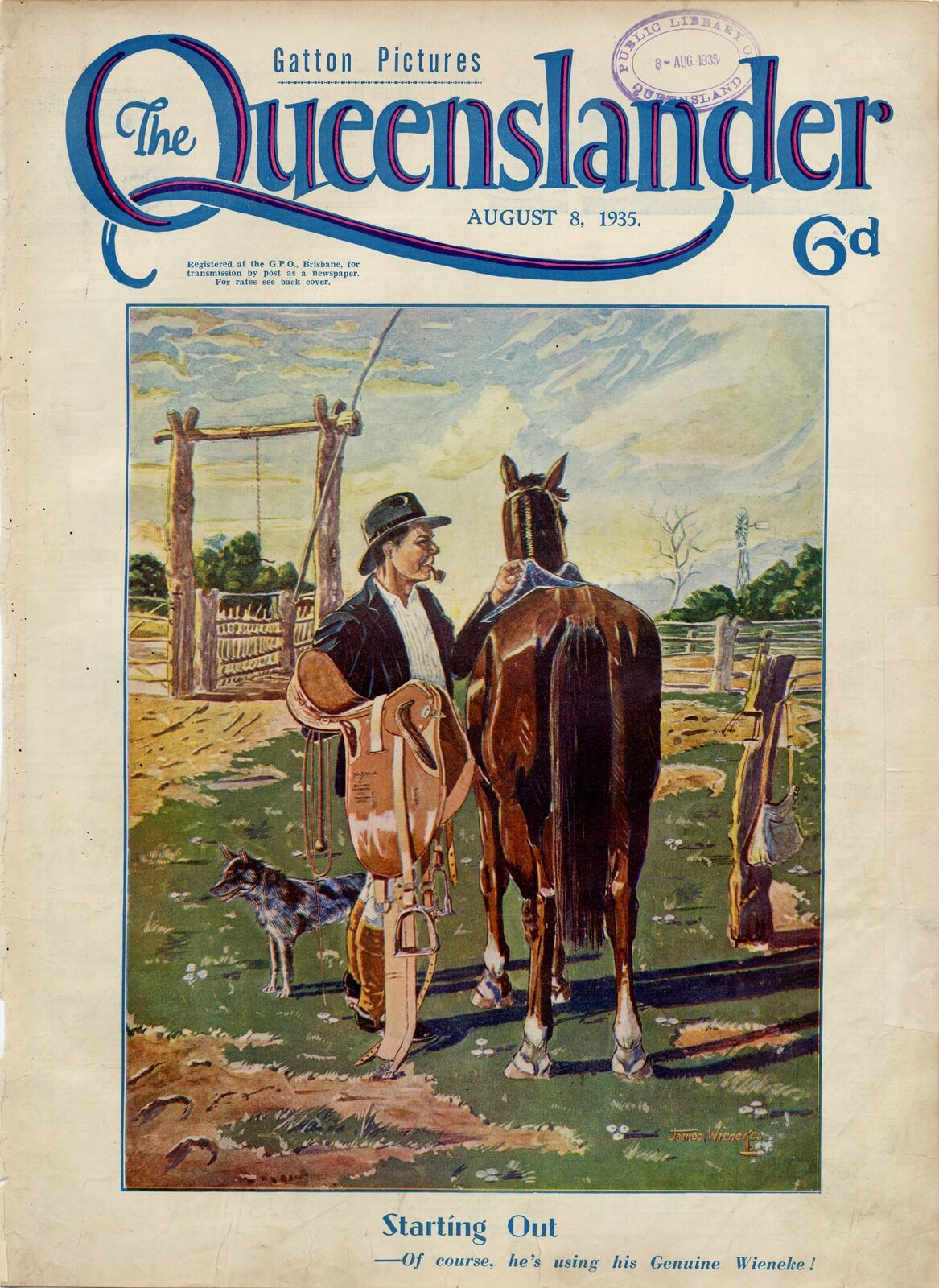
Utilising the muted tones and washed out colour palette of that sun-drenched region, James captured local people in their domain. He noted interesting facts about his subjects like their family ties or uncommon occupations. Several of these sketches were purchased by The Queenslander newspaper and used as cover illustrations for the Queenslander supplement magazine. Documenting the everyday people and their experiences was a project that he would revisit during his wartime service.
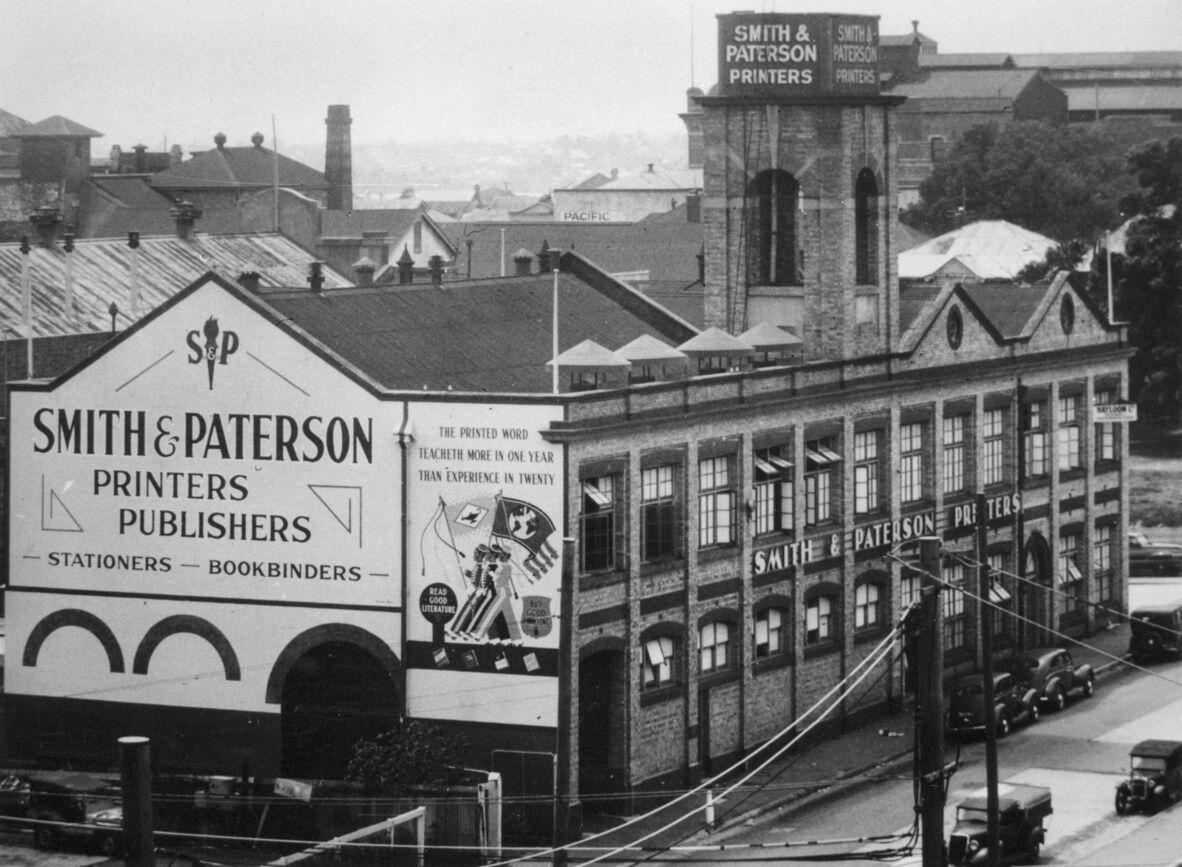
In his early professional life, James also worked as a draftsman, cartoonist and sign writer, with each of these roles embracing his artistic abilities. He exhibited his artworks regularly and produced several large-scale advertising signs on buildings throughout Brisbane.
With the outbreak of the War in the Pacific, and conflict coming so much closer to home for Queenslanders, James enlisted in the AIF in February 1942, at 35 years of age. James’ life continued to have a creative focus upon enlistment into the army. He trained initially with the 101 Anti-Tank Regiment at Grovely in Queensland before being sent on a camouflage training course in Townsville, July 1942. Australia was increasing the effectiveness of the camouflage being used to disguise troops, vehicles and camps in various environments. This was vitally important in lowering the risk of air raids and enemy observation of troop movements. The Camouflage Development and Training Centre, in Sydney, trained AIF personnel in the latest camouflage techniques, giving them the skills to develop new approaches as situations and environments required. James attended his second camouflage training course there. This one was designed for potential officers. Despite not scoring well on his examinations at the end of his second course, he was allocated back to Thursday Island, to the 6th Australian Division, Camouflage Training Unit, which was later known as 28th Camouflage Unit, a part of 6th Division’s Royal Australian Engineers.
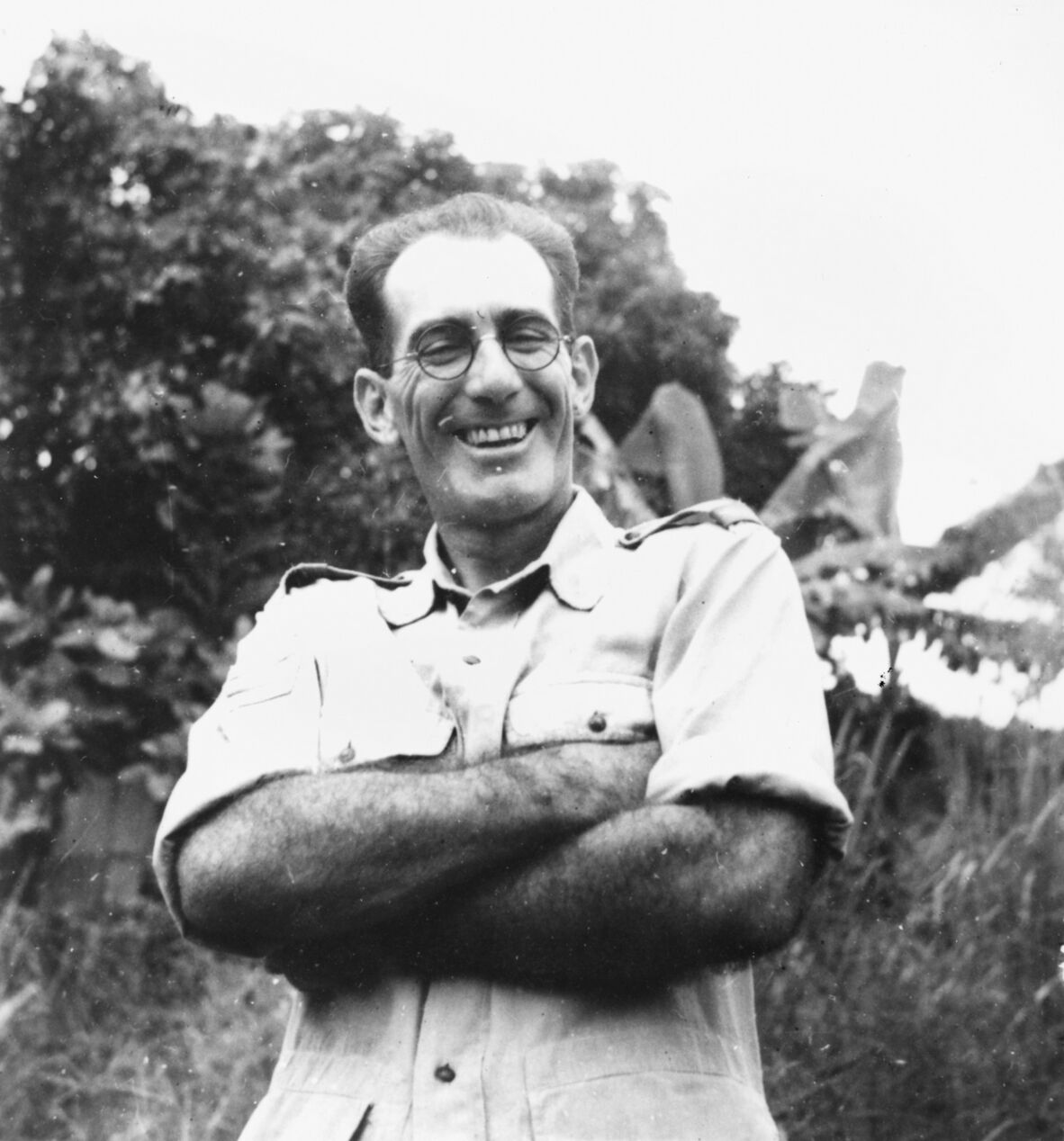
While serving with this unit in the Torres Strait Islands and Townsville, he was promoted from Private to Corporal on 1 August 1942, and Acting Sergent about one month later. Sergeant Wieneke was involved in the training of soldiers in the camouflage techniques he had learned and putting them into practice himself. His understanding of contrast and light and shade, from an artistic standpoint, would have been advantageous when tasked with making something disappear into the landscape through camouflage.
On Thursday Island, the 28th Australian Camouflage Unit researched different ways to disguise the numerous vital structures that the Defence Force were building in 1943 and 1944. They discovered that a vine, endemic to the islands of the Torres Strait, was very fast growing and effective in disrupting outlines and hiding what lay beneath. Vines were collected from several islands and transported to locations where buildings, like the newly built powerhouse and stores, anti-aircraft gun emplacements and the Water Transport’s Small Craft facility required screening from aerial observation. During his time in the Torres Strait, Sergeant Wieneke travelled to Hammond, Goode and Entrance Islands to collect vines and seeds for new plants and to attend to the maintenance of camouflage on structures in place there. Many man hours were spent on the manual labour of cultivating a living camouflage which added to the creative use of netting, canvas and paint to hide the infrastructure. Once this was well established, the unit was redeployed to another area of need.
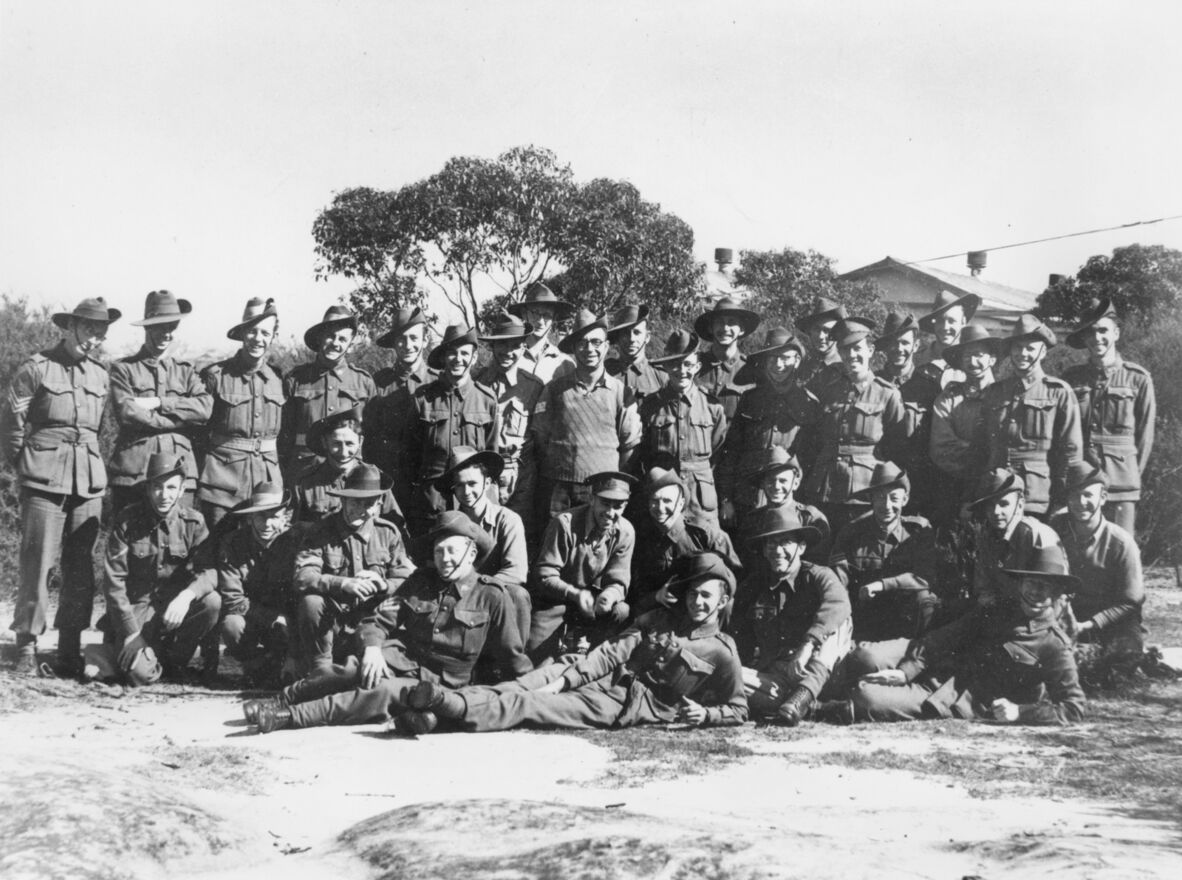
Towards the end of 1944, United States General MacArthur, the Supreme Commander of the allied forces in the Pacific, wished to have available to him the American troops working in areas of northern New Guinea and Bougainville for his planned return to the Philippines. It was decided that Australian troops would take over the Americans areas of operation with the Australian 6th Division deployed to the north coast of New Guinea.
James arrived in New Guinea with the 6th Division Royal Australian Engineers in early November, 1944. His rank of Sergeant was confirmed on 2 February 1945 not long after arriving in New Guinea. While 6th Division were fighting their way along 90 kilometres of the northeast coast of New Guinea, they also had to create their own accessibility through the very difficult terrain which included river crossings, sandy areas, mud and steep climbs in the thick jungle up two separate mountain ranges. As they sought out the pockets of resisting Japanese troops, they forged tracks, built roads, bridges and make-shift river crossings.
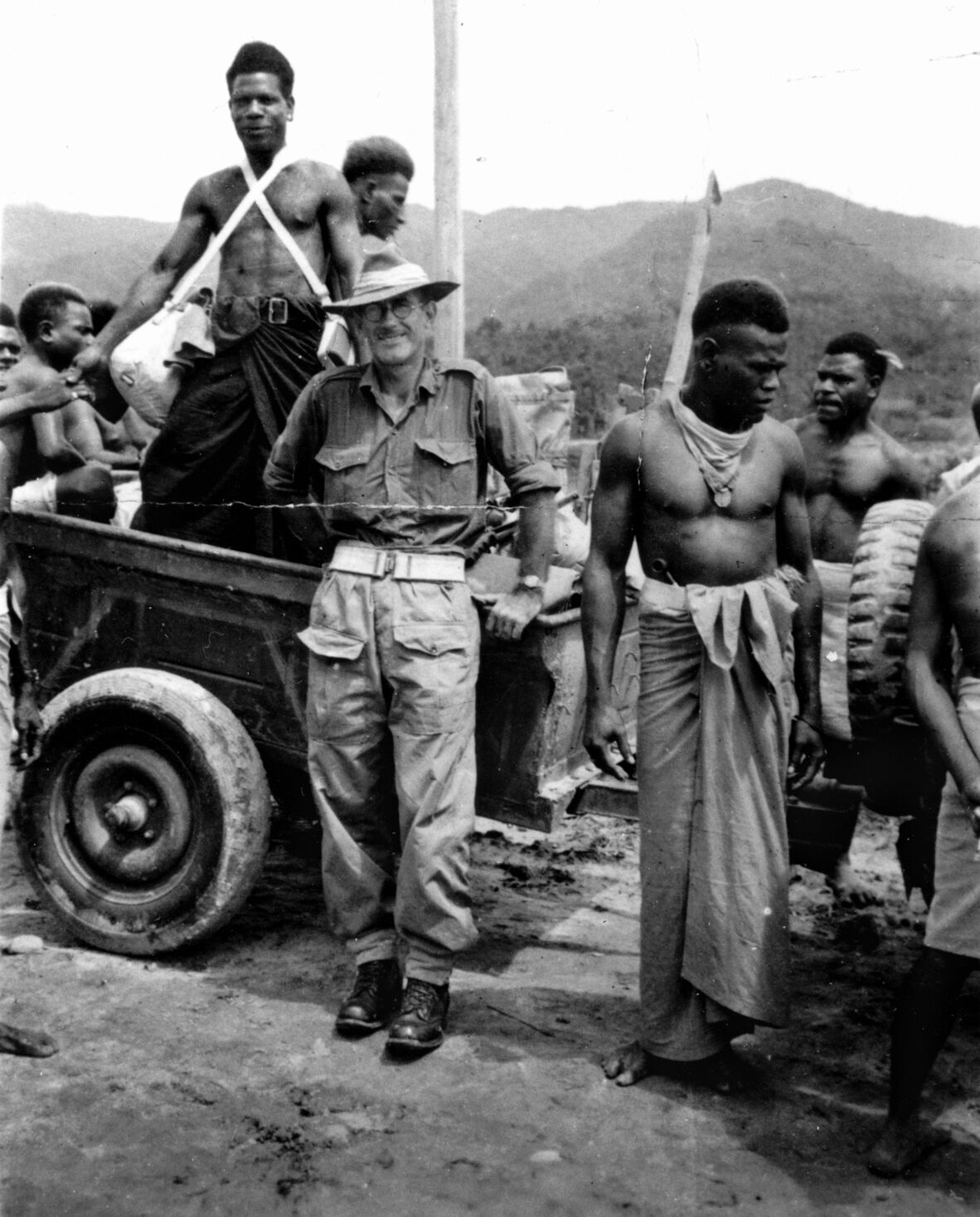
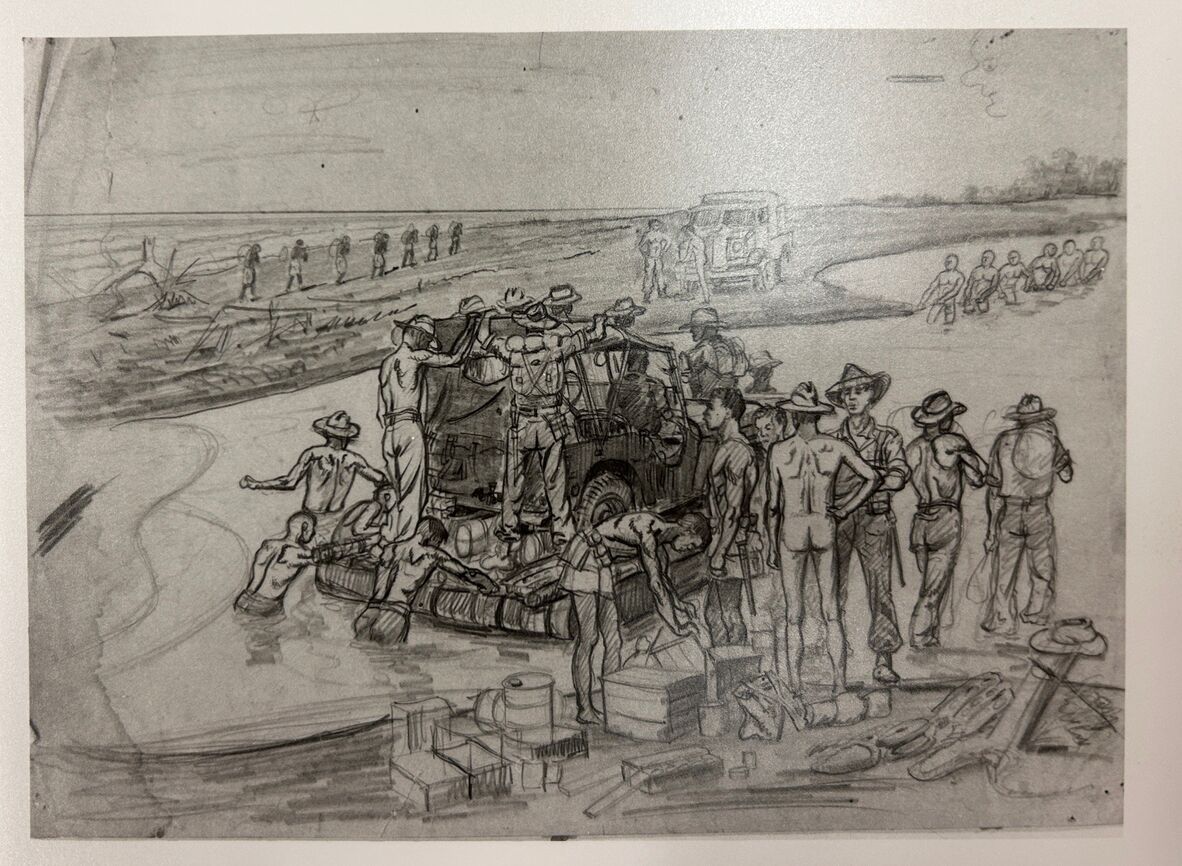
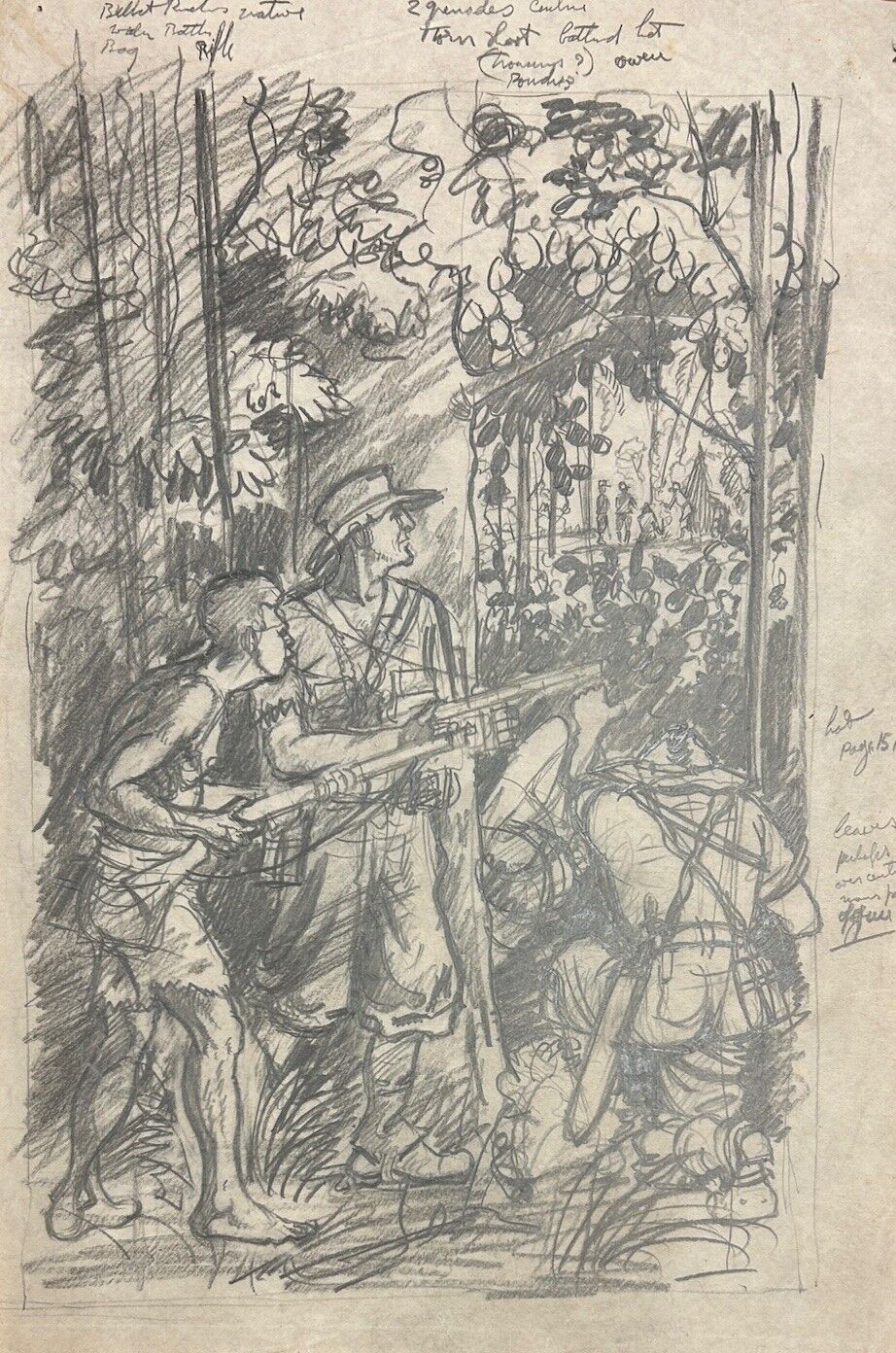
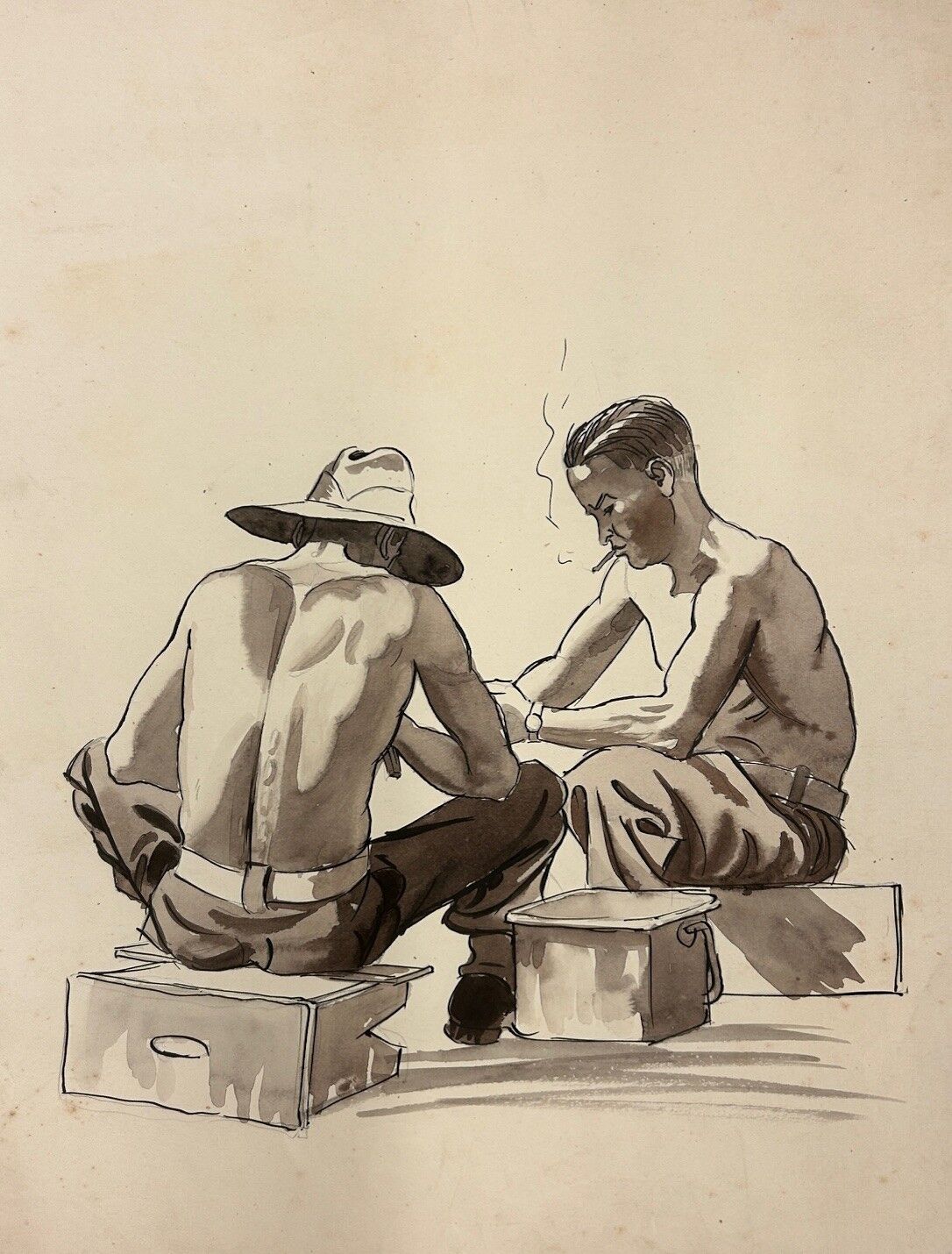
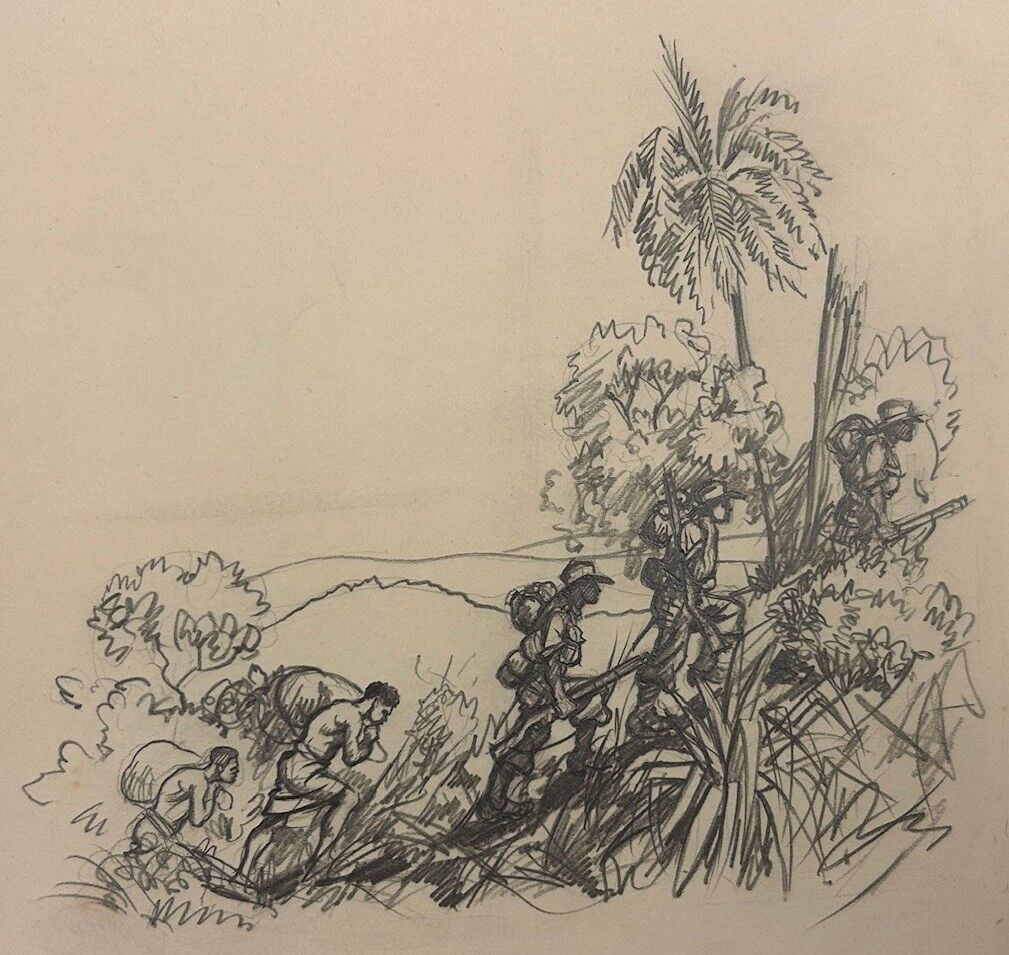
This is where James revisited the type of work he had done in western Queensland. Whenever he could find the time, between the fighting and his other tasks, he wrote and drew and painted. For over a year, Sergeant James Wieneke recorded the experiences he had himself and those of the men around him. He produced many sketches and water colour paintings of his observations. He then published 142 of these into a 60-page book titled, 6th Division: Aitape to Wekak, along with pages of text describing the movements of the Division. State Library of Queensland holds copies of the book in their collections (6th Division sketches)
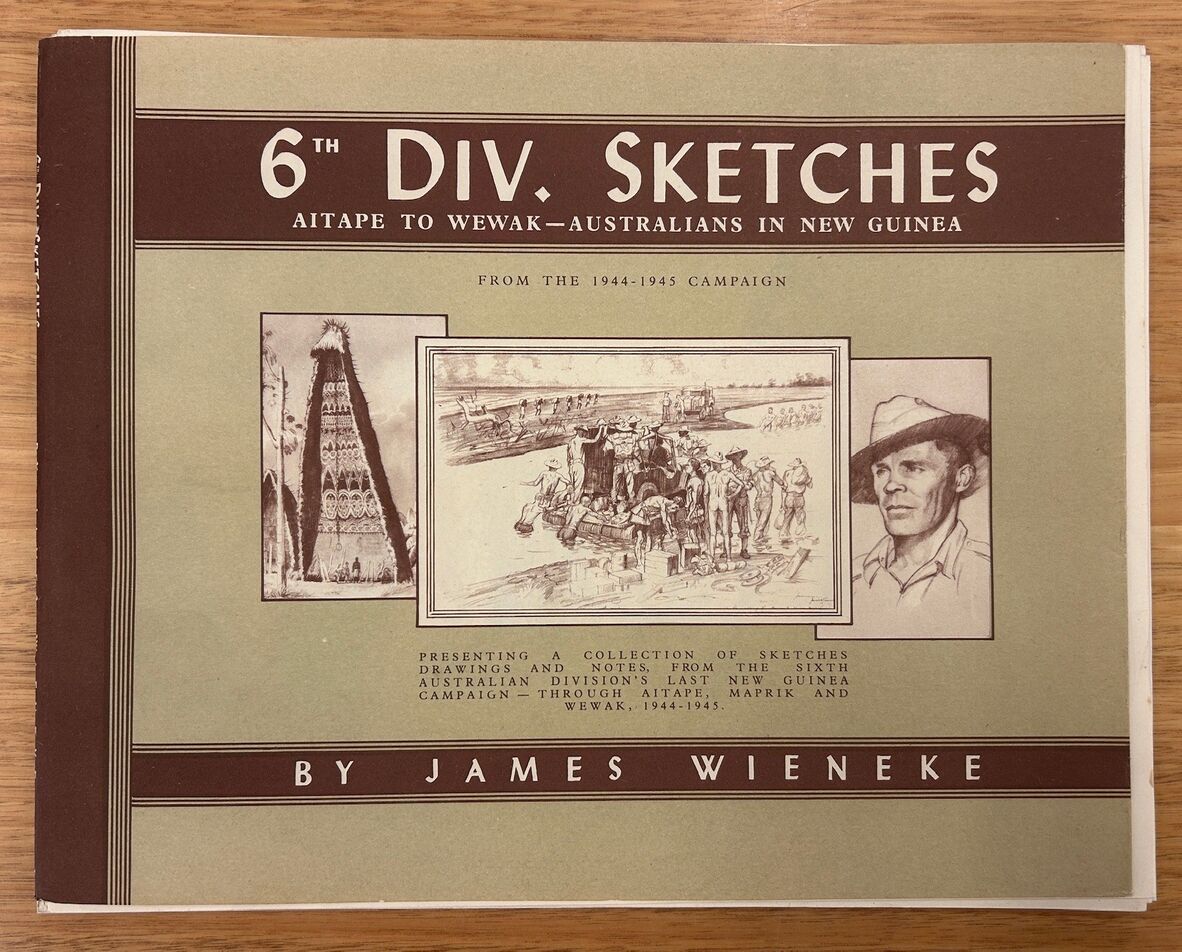
Even though this was not part of his official role, James recorded the history of the men of the 6th Division through his detailed, descriptive text and wonderful illustrations. His sketches display movement, emotion and character. The watercolours capture the dark, foreboding nature of the jungle environment that the men were walking into, and his sensitive use of line drawings display the Australian soldiers’ camaraderie, humour and enthusiasm when partaking in routine tasks like unloading ships or collecting drinking water.
James also recorded the moment when on 10 September 1945, Japanese soldiers approached to ask if they may come into the Head Quarters camp. This preceded the Japanese commander in New Guinea, Lieutenant General Adachi, Commander of the 18th Japanese Army arriving for the purpose of formal surrender. Sergeant Wieneke’s pictures and text describe this historical moment and the large-scale surrender ceremony that followed.
While the fighting was at an end, there was still much to be done before everyone could go home. Often referred to as ‘mopping up’, there are many administrative tasks as well as the enormous logistical operation of arranging the transport, to Australia, of vehicles, equipment and troops. James boarded the aircraft carrier, HMS Implacable on 13 December 1945, and was officially discharged from the army on 6 February 1946.
James was able to collate his notes, sketches and paintings and publish his book about 6thDivision’s experiences in northern New Guinea later that year. In his artist’s note at the front of the book James has written:
1946
Major-General Sir Jack Edwin Stawell Stevens, KBE,CB,DSO,ED was the commanding officer of the Sixth Division and James’ superior during the Aitape to Wewak campaign. He writes favourably of James and his sketches and notes in the forward of the book:
1946
The Australian Women’s Weekly reviewed an advance copy of 6th Div. Sketches and interviewed James. In their Worth Reporting column, on 7 December 1946, they noted:
7 December 1946
James’ return to civilian life saw him teach drawing, design and art history to high school students in Brisbane. He wrote a column as an art critic for the Brisbane Telegraph newspaper. In this role he reviewed works in exhibitions throughout Brisbane giving his opinion of the skills of the artists and where he felt they could improve.
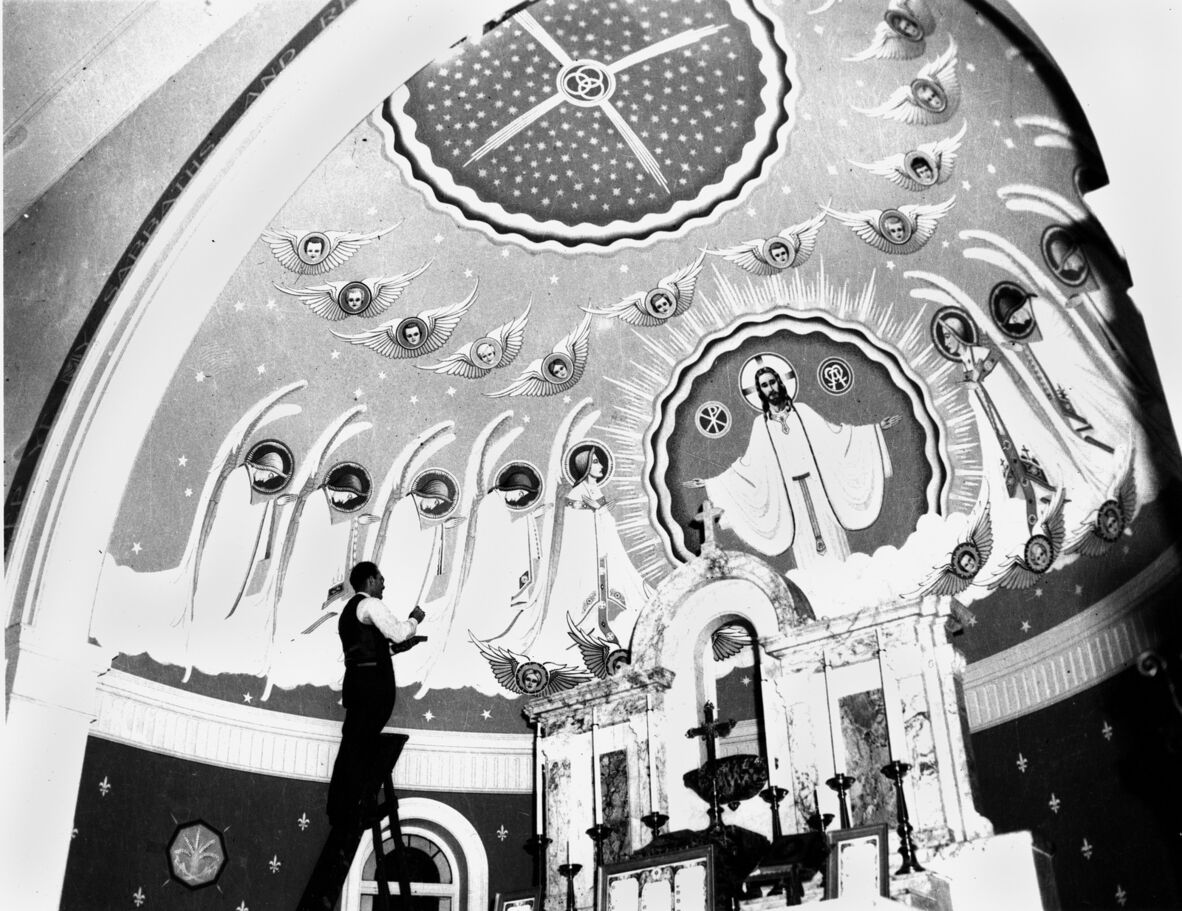
In 1948, St Joseph’s Church at Kangaroo Point in Brisbane commissioned James to paint a decorative mural on the large dome above the Sanctuary in their church. James had previously completed a mural in the side chapel of St Stephen’s Cathedral in 1939, but this was a much larger composition featuring the resurrection of Christ. It took three months to complete the painting in oils on plaster.
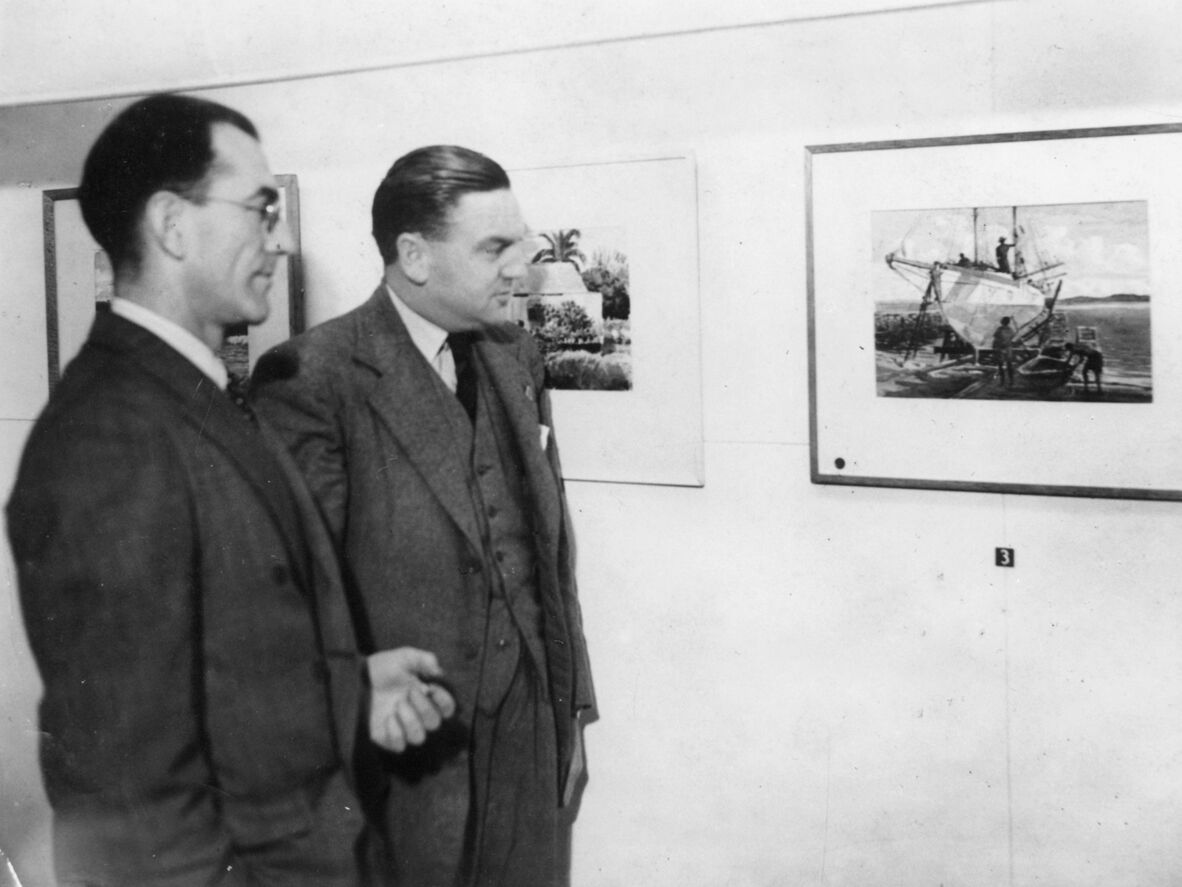
James purchased the Moreton Galleries that were situated in the Amp Chambers in Edward Street, Brisbane, in 1950. As director, he led this gallery through a period of high demand, hosting many exhibitions for local and interstate artists.
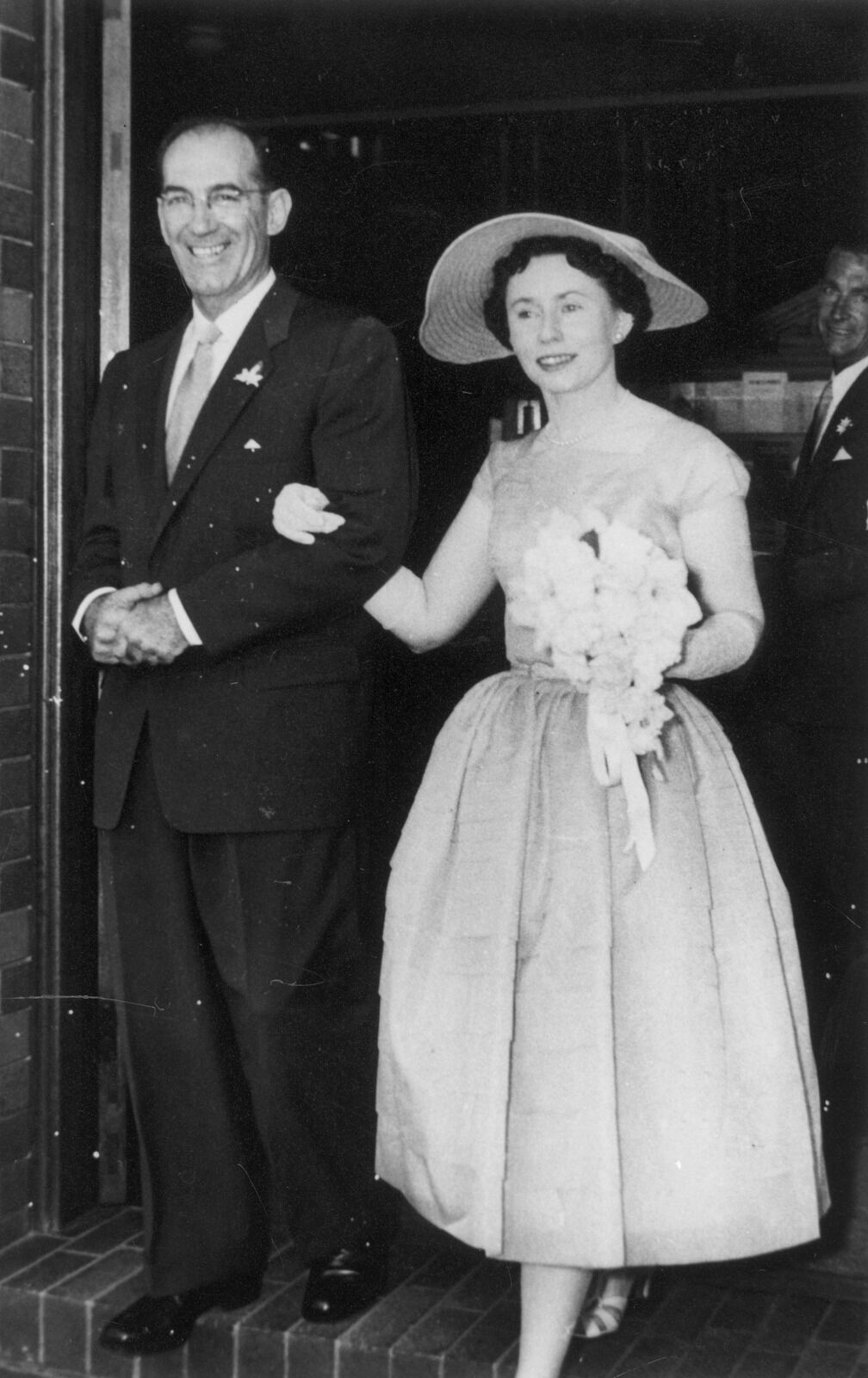
In 1957 James married his long-time love Anthea Dyke in St Joseph’s Church at Kangaroo Point with his own artwork on the domed ceiling above the altar. Anthea accompanied him on many painting expeditions and the couple had one daughter named Ann.
James’ time as director of the Moreton Galleries came to an end in 1967 when he accepted a position as director of the Queensland Art Gallery. When the State Gallery Trustees put forward their recommendation to the Education Minister for James to be appointed as Director, the Trustees Chairman, Sir Leon Trout, was quoted in The Courier Mail newspaper on 31 May 1967, as saying:
31 May 1967
James held this position until he retired in 1974. He passed away on 30 March 1981, aged 74 years, and is buried at Mount Gravatt Cemetery. He also has a memorial plaque in the Queensland Garden of Remembrance in Bridgemen Downs on Brisbane’s north side. His wife, of 24 years, outlived him by more than 40 years.
This Anzac Day 2026, we honour the service and historical record contribution of Sergeant James Wieneke QX28273. State Library of Queensland has two copies of James’ book in their collections, and you can also access the James Wieneke Collection of Photographs which follows his personal and professional life. For more information you can read the State Library of Queensland blogs on Mural at St Joseph's Church, Kangaroo Point, 1948 blog or James Wieneke collections blog.
Further reading:
28 Camouflage Unit diaries July - December 1943