A family affair: The Foot brothers part one
State Library of Queensland was given an extensive collection of correspondence and photos maintained by the Foot family, who hailed from northern Queensland. The papers span the period 1914 to 1925 and provide a first-hand account of the Foot family’s contribution to World War I. Three of the boys Henry (Hal), George and Alexander (Alec) served at Gallipoli where two of them would make the ultimate sacrifice. Another brother, Eric, signed up in 1917 and served in Europe, making it home in 1919. Due to the richness of this collection, it will require 2 blogs to do the family's history justice. The first blog will cover the beginning of the war through to the evacuation of Gallipoli, and the second will look at the remainder of the war years and briefly address the post war years.
Alfred and Mary Foot from Cardington Station, about 70 kilometres west of Townsville, were married in 1881 and by 1914 had 10 children, 5 daughters and 5 sons. Four of their sons were of age when World War I started.
Pacific Campaign with the Australian Navy and Military Expeditionary Force:
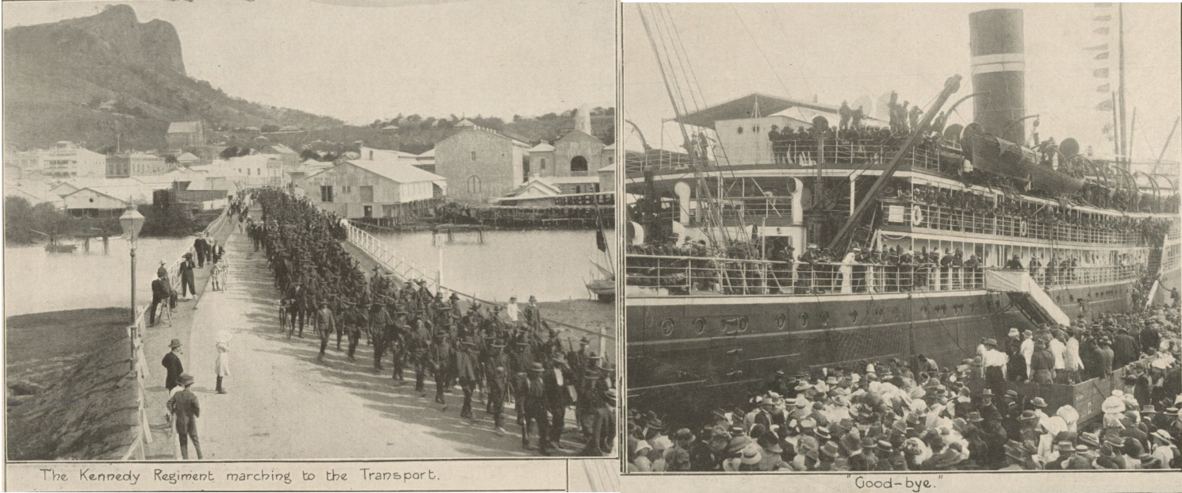
The older 3, Hal, George and Eric first signed up in August 1914 to be part of the Australian Navy and Military Expeditionary Force (ANMEF), the first military unit raised for service overseas. The role of the expeditionary force was to capture German colonies in the Pacific. The main force for the ANMEF was recruited in NSW. An additional militia Battalion from north Queensland was recruited to garrison Thursday Island. The Foot brothers went into camp at Kissing Point in Townsville on 6 August 1914 and were put in H Company of the Kennedy Regiment. They boarded the SS Kanowna on 8 August heading for Thursday Island. The ship carried over 1000 men. On 12 August, while at Thursday Island, all three boys volunteered for service in the Pacific, and would become part of the 2nd Battalion ANMEF later known as the ‘Dirty 500’. These volunteers embarked for Port Moresby where they were to meet up with the main force of the ANMEF.
Hal's diary entry, 15 August 1914
The Kanowna left Thursday Island on 16 August and arrived at Port Moresby a few days later. It remained there for nearly three weeks waiting for the main force to arrive from Sydney. Unfortunately, life aboard the ill-prepared Kanowna did not go smoothly. The ship had no bunks or mess, so the troops slept on the deck and after collecting their food from the kitchen ate there as well.
George's letter home, 23 August 1914
Furthermore, Kanowna had no facilities to make fresh water so relied on the tanks that had been filled in Australia. This meant those aboard were restricted to about 2 pints of water a day for drinking and washing. Dishes were washed with sea water, and George noted on 23 August.
George's letter home, 23 August 1914
When the Sydney fleet arrived on 5 September, Commander W. Holmes declared the north Queensland troops were unfit for service. However, they decided to persevere and join the main force heading to Rabaul. Not far out of Port Moresby, the stokers, who had been complaining, for some time, about the lack of water for washing and rehydration, stopped work.
Hal’s letter home, 12 September 1914
The soldiers were asked to volunteer for stoking, and nearly all did, including George and Eric. The mutiny by the stokers resulted in the Kanowna being sent back to Townsville where the troops were discharged.
Training in Brisbane 1914:
Henry and George transferred directly into the AIF on the 17 of September, Eric returned home, and a younger brother, Alec, signed up on 18 September. Hal, George, and Alec were shipped off to Brisbane for training. From the time they arrived in Brisbane, the brothers kept up regular correspondence with their family with frequent letters to their mother, their sisters, and their youngest brother. George also corresponded with Eileen Marshall, a young family friend who lived with her parents in Townsville.
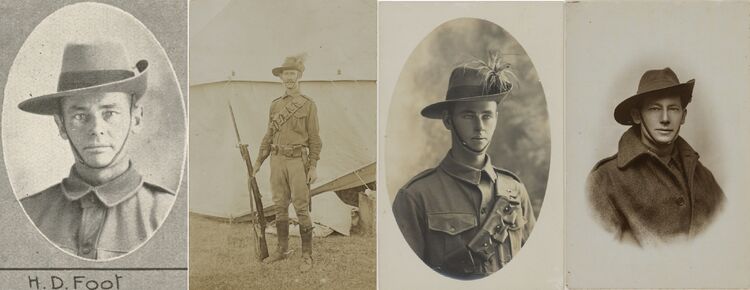
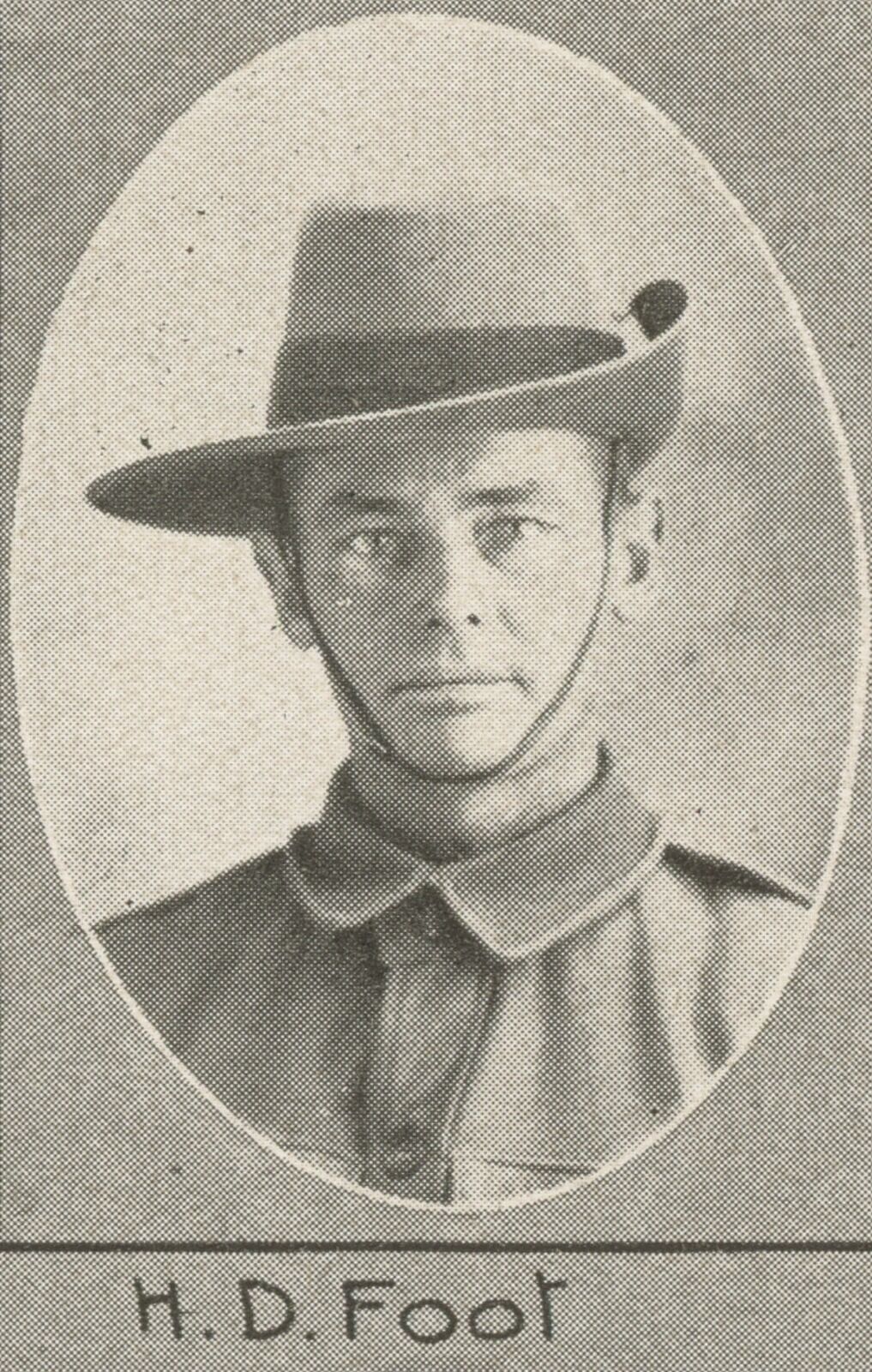
On arrival at Enoggera Camp, the boys were assigned to their respective units. Henry Daintree Foot (Hal) (#135) was 31 when he enlisted and joined the 15th Battalion. He was in A Company and promoted to Lance Corporal within 2 weeks. His diary outlines his time at the camp in Brisbane.
George Pierce Foot (#74) was 29 and joined the Light Horse (LH). He was appointed to 5th LH Regiment and due to his shooting ability offered a position in the Machine Gun Section.
George's letter home, 26 September 1914
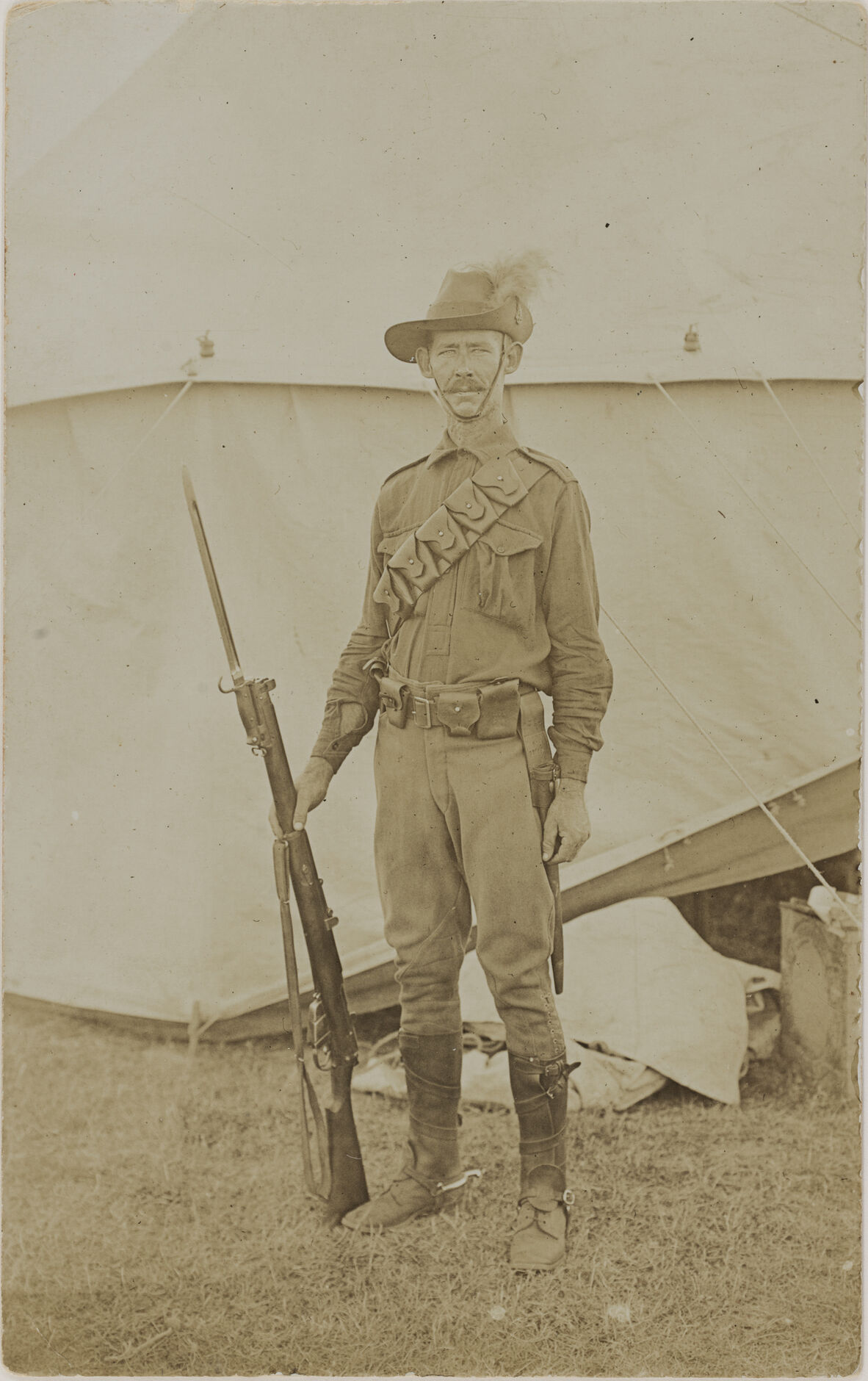
Alexander Madden Foot (Alec) (#244) was 22 when he enlisted and joined George in the 5th LH in October. Here he took on a role as the groom for one of the Colonels.
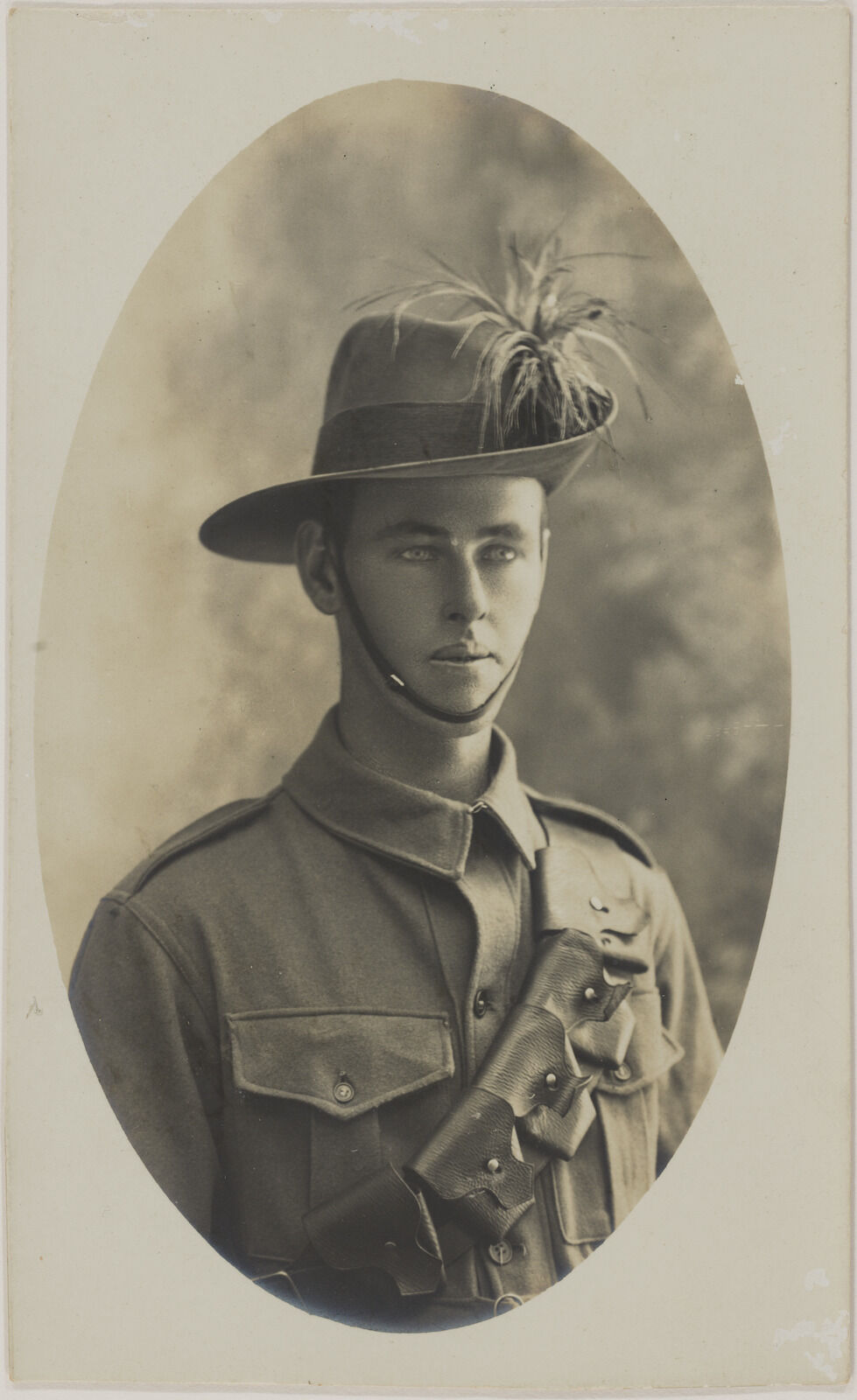
More training in Cairo:
The brothers headed off overseas in December 1914. George, Alec and their horses sailed from Sydney, having travelled there by train from Brisbane, on board the SS Persic on 21 December. Hal departed from Melbourne on the 22nd aboard the HMAT Ceramic. They managed to communicate with each other via semaphore when the convoy was in Aden, Yemen, on 31 January 1915. The convoy arrived in Egypt early February, and Hal was stationed with the 15th Battalion at the Heliopolis Camp in Cairo for training, which involved digging trenches, skirmishes, and mock attacks. George and Alec went with the Light Horse to Maadi camp, on the edge of the desert south of Cairo, where their training also continued.
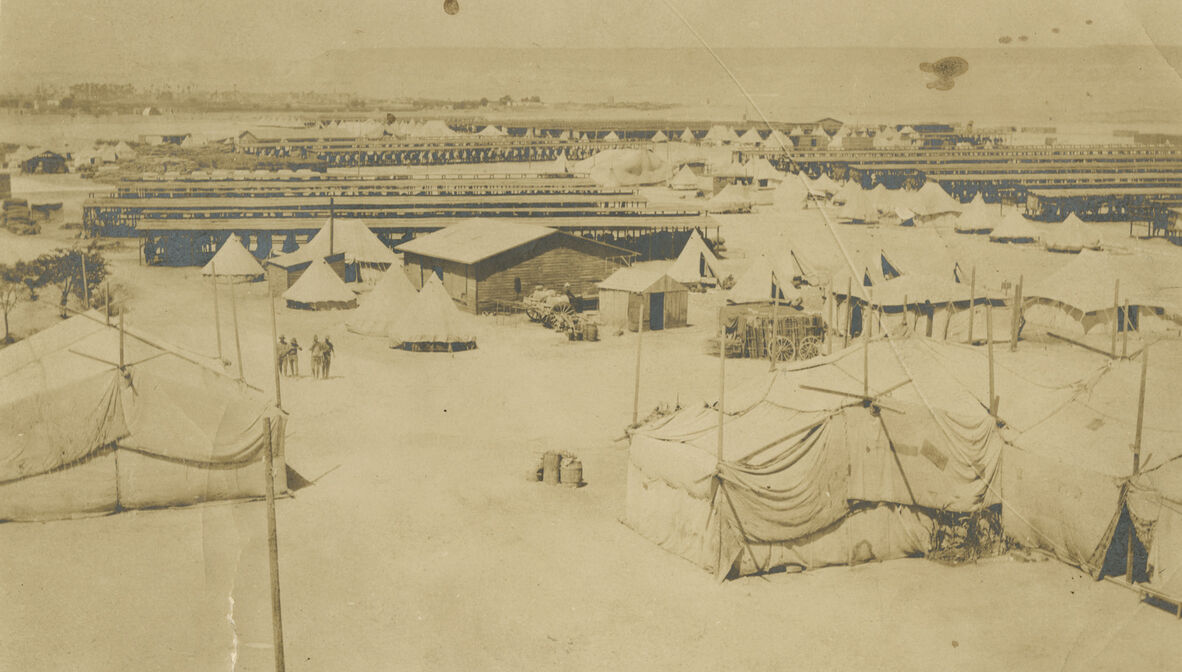
The boys talked in their letters about failed and successful attempts to meet up including: Hal unable to make it for sightseeing with George on 15 February; George seeing Hal at his camp later in February; and Alec going to visit Hal at Heliopolis camp on 21 March but missing him as he was out on leave. Hal’s letters also mention catching up with George and Alec and sightseeing around the pyramids, sphinx, and various temples. From late February he talked about expecting to leave for the front in France and he commented that:
Hal's letter home, 25 February 1915
Gallipoli Campaign:
Finally on 10 April 1915 the 15th battalion moved by train to Alexandria, where they embarked on troopships bound for Mudros. Hal mentions that Alec and George were not part of this contingent when he writes from the ship.
Hal's letter home, 20 April 1915
Hal did not have to wait too much longer as the 15th landed at Anzac Cove on the afternoon of 25 April, 1915.
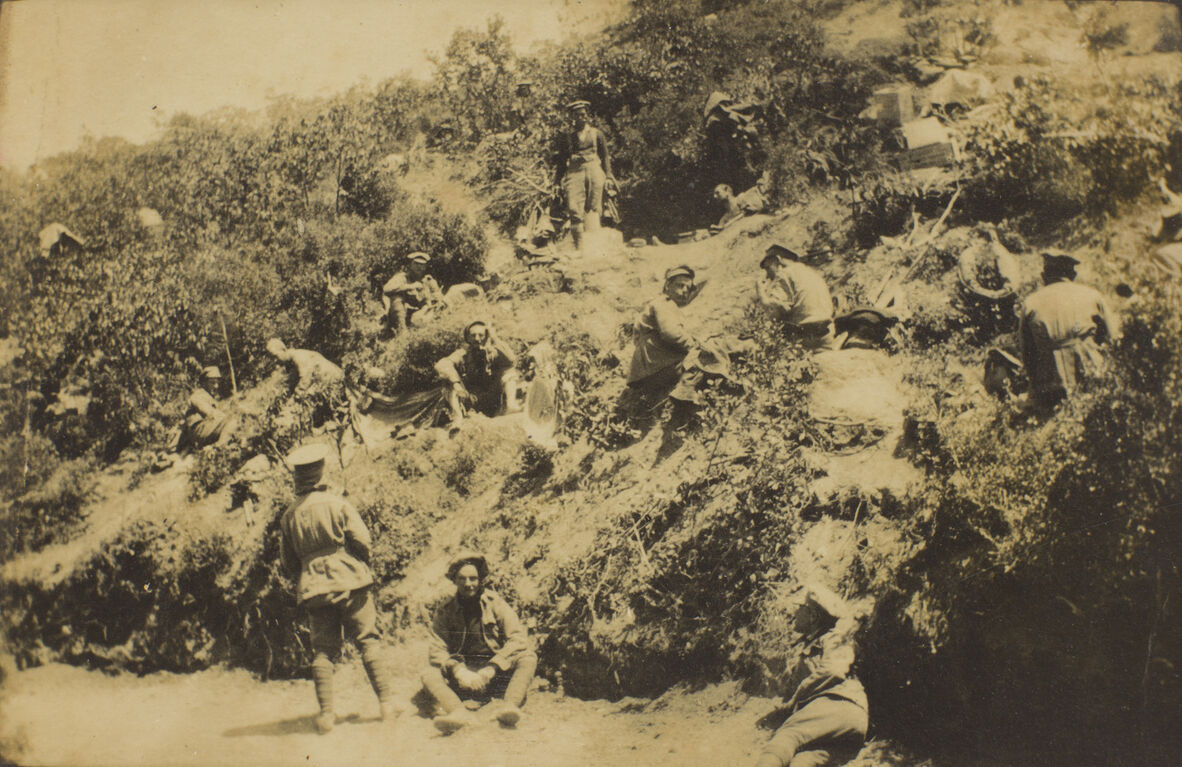
We have no more correspondence from Hal, and he was killed in action less than a week later, on 1 May up towards Quin’s Post. He has no known grave but is commemorated at the Lone Pine Memorial. Getting details of what was happening at Gallipoli, even for those in Cairo, was very difficult, and George and Alec were unsure of his fate for some time.
George's letter home, 7 May 1915
It wasn’t until George himself got to Gallipoli that he learned the details of Hal’s death. On 15 May, the 2nd LH Brigade and some of the 3rd LH Brigade marched from Maadi, dismounted. George and his machine gun section were with those that left. However, Alec was with those left behind with the horses. The Light Horse reinforcements went ashore at Anzac Cove on 20 May. George’s first letter home from Gallipoli addresses Hal’s fate.
George's letter to his mother, 21 May 1915
George would continue to question members of the 15th Battalion attempting to get more details for the family at home. On his third trip across to the 15th he heard that:
George's letter to his sister, 19 August 1915
George’s letters to various family members and his ‘friend’ Eileen Marshall paint a vivid picture of life at the front. He describes the trenches they lived in, the food they cooked (including scones and pancakes when they got eggs), getting down to clean off in the ocean, and the skirmishes and persistent shelling he was involved in.
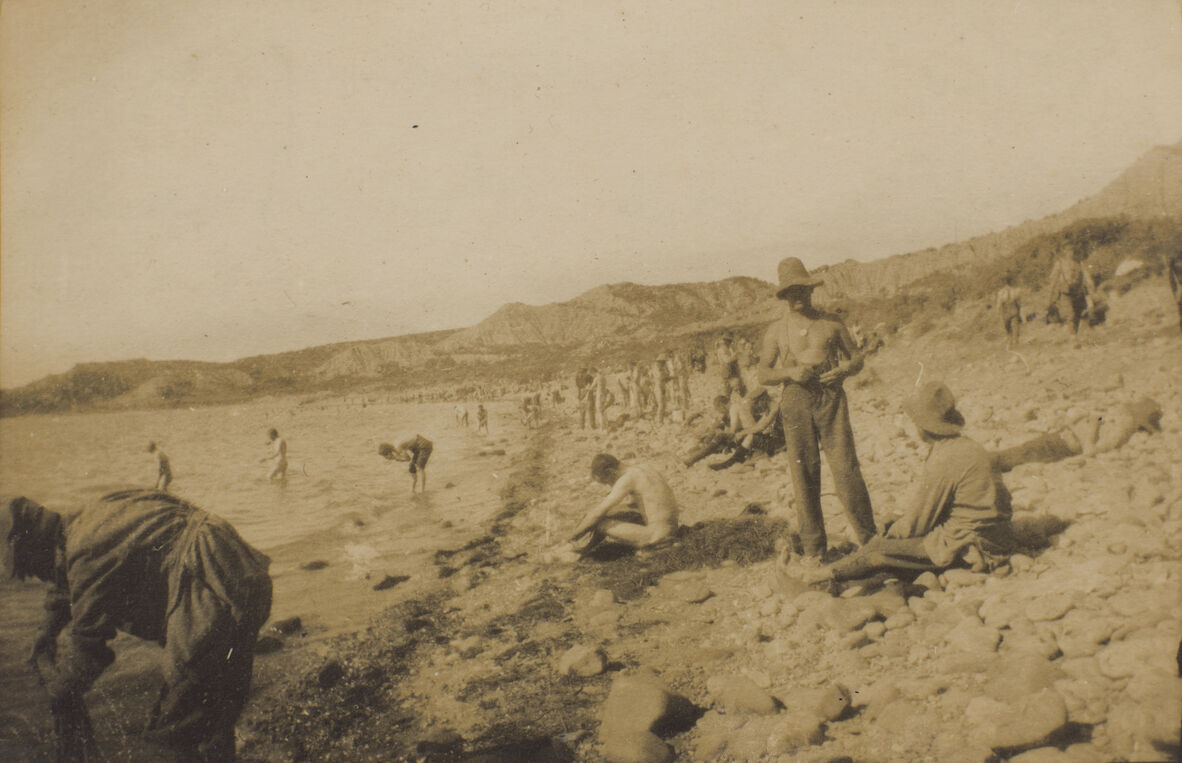
George's letter to his brother, 6 September 1915
George was very impressed with the periscope his mother sent him and found it very useful in the trenches. In mid-September 1915, he was sick with diarrhoea and was given a break off the peninsula for 17 days.
George's letter to his sister, 9 January 1916
Meanwhile back in Australia, Eric married Hilda Elizabeth Smith on the 30 August 1915. This news was well received by Alec and George.
While Alec was frustrated in Cairo, he did comment on his new skills with horses.
Alec's letter home, 9 April 1915
George often mentions waiting for Alec to get to Gallipoli. A large group of reinforcements from the 5th LH arrived there on 2 October, but unfortunately Alec wasn't with them as he had been ill just before they embarked. Meanwhile, George was made a temporary Corporal on 30 October, and this was made substantive on 10 December 1915. Alec finally arrived at Gallipoli with some reinforcements in November.
George's letter to sister, 14 November 1915
Unfortunately, Alec did not have George’s luck and was killed in action on 22 November just over a week after his arrival.
George's letter to his sister, 20 November 1915
A week later it snowed at Gallipoli and rumours of leaving also started to circulate.
George's letter to his mother, 30 November 1915
On 14 December, the 5th LH received official advice that it was to evacuate the Anzac position. On the 18th George went with a friend to the Shell Green graveyard and took photos of Alec’s grave. Alas, Hal had no known grave.
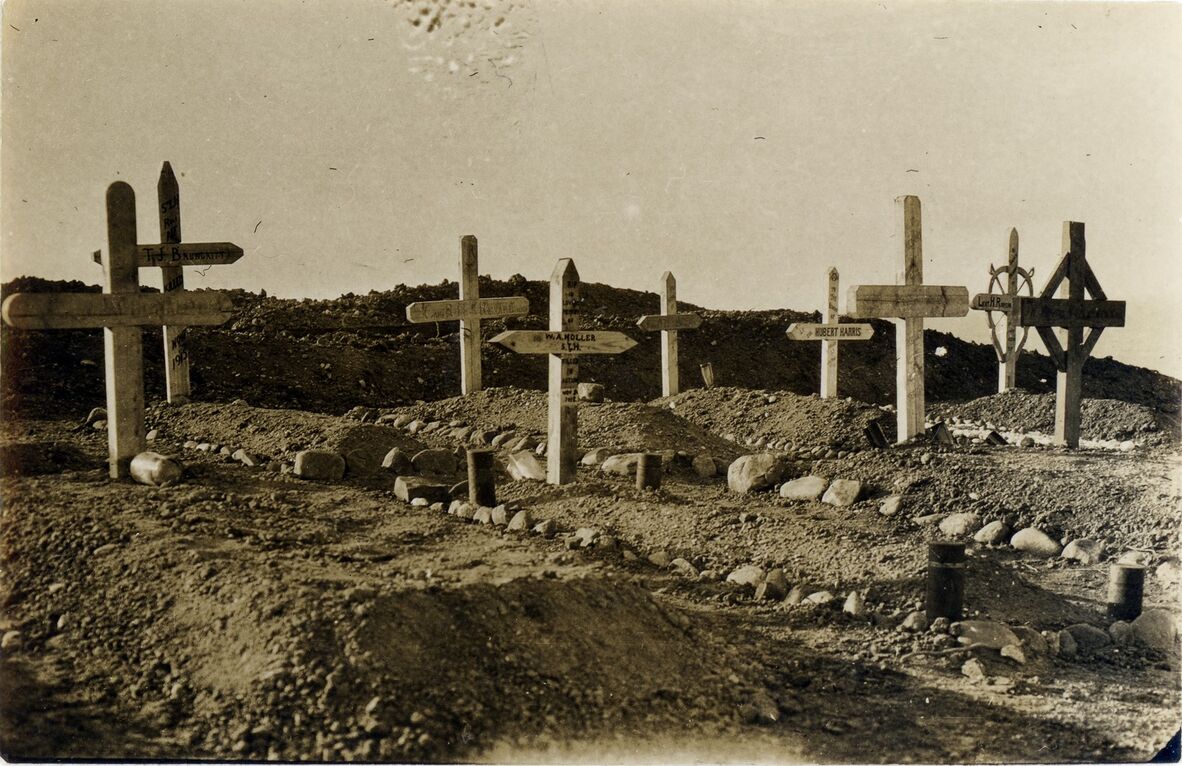
George, the only surviving brother stationed at Gallipoli, evacuated on the night of 19 – 20 December. After over 7 months on the Peninsula and the loss of his two brothers, George had this to say about the campaign:
George's letter to pen pal Eileen, December 1915
Join us for part two where we explore the Foot Brothers’ service through 1916-1919.